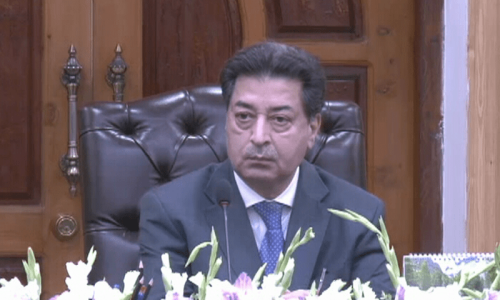
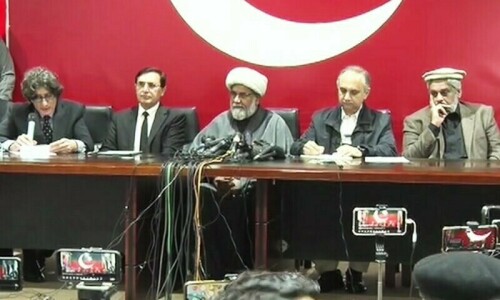
THE ECP’s decision to deny the Sunni Ittehad Council — the new home of PTI-affiliated lawmakers who won the Feb 8 polls as independent candidates — a share of the special seats reserved for women and minorities has come as a disappointment to those who believed in the fairness of the electoral process.
Even though the much-delayed ECP decision, the latest in a series of moves ostensibly aimed at keeping the PTI out of elections and parliament, was not unexpected, many had hoped that the spirit of democracy would prevail over the technicalities cited by the ECP to justify its action.
According to the ECP, the SIC could not stake a claim to a share in the reserved seats “due to having non-curable legal defects and violation of a mandatory provision of submission of party list for reserved seats which is the requirement of law”. It defended its decision by pointing out that the SIC had not contested the elections for any seat in the national or provincial assemblies.
That is not all. The ECP generated more debate by allocating what many see as the SIC’s share of reserved seats to other political parties. By saying that “the seats in the National Assembly shall not remain vacant”, it has indirectly accepted the argument that the Lower House as well as three provincial assemblies, barring Balochistan, were incomplete when they elected the Speaker, deputy Speaker, the prime minister and the chief ministers.
According to media reports, the SIC’s combined loss amounts to 77 seats in the national and provincial assemblies.
The ECP might have its own logic but its order does ignore past precedent. For instance, the Balochistan Awami Party, which did not contest the first post-merger polls in former Fata, was allowed a reserved women’s seat after independents joined the party. Meanwhile, a 2018 Lahore High Court judgement held that a political party’s share of reserved seats was non-transferable. The ruling had come after a Returning Officer did not accept PTI nominees for reserved seats due to a slight delay in the submission of names.
In short, the ECP has exacerbated the crisis it triggered when it denied the PTI its election symbol, again on technical grounds — a decision controversially upheld by the apex court. Like the party symbol issue, the legality of the latest ECP determination will also be decided by the superior judiciary.
Unless addressed, such debatable actions will continue to impede the growth of democracy in the country. Today, these decisions are affecting the PTI; tomorrow other parties, which, for the moment, can enjoy their share of reserved seats and see their numerical strength enhanced in the assemblies, might find themselves at the receiving end when they fall out with the powers that be.
Published in Dawn, March 5th, 2024