0
0

UN human rights chief Volker Turk on Monday said China was violating fundamental rights in its Xinjiang and Tibet regions and called on Beijing to change course.
Turk, who has been criticised for not challenging China strongly enough over its human rights record, also asked Beijing to release rights defenders arrested under the “vague” offence of “picking quarrels and making trouble”.
Turk called on Beijing to implement recommendations made by his office and other human rights bodies “in relation to laws, policies and practices that violate fundamental human rights, including in the Xinjiang and Tibet regions,” in his global update to the UN Human Rights Council.
“I am engaging with the Hong Kong authorities on continuing concerns about national security laws,” he added.
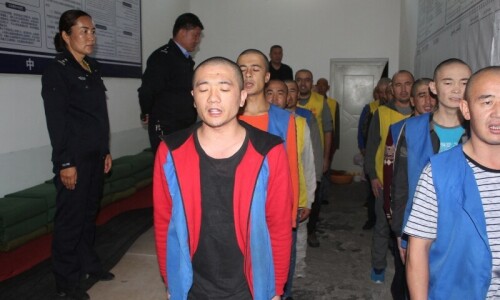
In the northwestern Xinjiang region, China is accused of incarcerating more than a million Uyghurs and other Muslim minorities. Beijing vehemently rejects the charges.
A report by Turk’s predecessor Michelle Bachelet — released just minutes before her term ended in 2022 — cites possible “crimes against humanity” in Xinjiang. The report was flatly rejected by China.
The report detailed “credible” evidence of torture, forced medical treatment and sexual or gender-based violence — as well as forced labour.
But it stopped short of labelling Beijing’s actions in Xinjiang a “genocide”, as the United States and some Western lawmakers have done.
Beijing denies allegations of abuse and insists its actions in Xinjiang have helped to combat extremism and enhance development.
Turk said his office was in talks with China on counter-terror policies, gender equality, minority protection, civic space, and economic, social and cultural rights.
“As we move forward, it is important that this dialogue yield concrete results,” he said.
Turk recognised China’s advances in development and in alleviating poverty, but urged that such policies be accompanied by reforms “to align relevant laws and policies with international human rights standards”.
“I particularly encourage revision of the vague offence of ‘picking quarrels and making trouble’ in Article 293 of the Criminal Law, and I urge the release of human rights defenders, lawyers and others detained under such legislation,” he said.
In January, China received stinging criticism from Western countries during a review of its rights record at the United Nations, but other nations heaped praise on Beijing, including Russia and Iran.
China was facing a regular Universal Periodic Review — an examination all 193 UN member states must undergo every four to five years to assess their human rights record.
China insisted it was making great strides to improve the lives of its people, end poverty and protect rights, and slammed critics for “politicising and weaponising” rights issues to interfere in its internal affairs.
But Western countries highlighted a crackdown on civil liberties and a sweeping national security law imposed on Hong Kong in 2020 to quash dissent after pro-democracy protests.
Others voiced alarm at alleged efforts to erase cultural and religious identity in Tibet, and repression in Xinjiang.