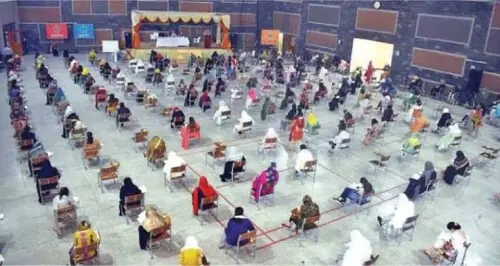
KARACHI: Speakers from various walks of life on Wednesday highlighted that women, particularly those managing households, are more affected by climate change and face challenges in accessing economic opportunities and equal wages as compared to men.
They were speaking on the concluding day of the two-day conference organised by FemConsortia, a coalition of 12 women’s rights organisations and five alliances across Pakistan.
Uzma Latif, who presented her research paper on the occasion, highlighted the disproportionate effects of climate change on women, particularly in Sindh. The paper revealed staggering statistics, indicating that 77 per cent of women and 34pc of men in Sindh, along with 70pc of women and 30pc of men in Punjab, are adversely affected by climate change.
She emphasised that women bore the brunt of climate-related challenges more than men, attributing it to increased caregiving responsibilities exacerbated by the unpredictability and insecurity brought about by climate-induced dislocation.
Focusing on Thatta and Mirpurkhas, Ms Latif underscored how climate change had magnified women’s caregiving roles within households, leading to serious effects on their mental health. She highlighted that the aftermath of events like the 2022 floods and the ongoing COVID-19 pandemic had led to food shortages, disproportionately affecting women, with Sindh recording the highest proportion of underweight women, both pregnant and non-pregnant.
Javeria Afzal, climate change advisor of Helpage International, called upon political parties to prioritise discussions on climate change and its specific impacts on women, particularly those residing in rural areas. Meher Nosherwani from the Trust for Conservation of Coastal Resources emphasised that women who were primarily responsible for managing food, fuel, and water within households, were more affected by climate change as compared to men.
Whereas Rubina Jamil addressed barriers faced by women in accessing economic opportunities, citing the lack of representation in decision-making processes and unequal wages. She also highlighted the plight of women working in the agriculture sector, who often receive produce instead of fair wages.
Nuzhat Shirin highlighted the shortcomings in existing legislation, particularly concerning home-based workers and urged for stronger legal protections for them. Despite these challenges, however, the speakers acknowledged the resilience of women who continued to contribute positively to the country’s development.
Renowned playwright Bee Gul emphasised the importance of addressing women’s issues in mainstream media and pledged to bridge the existing gap through her work. Former TV presenter and politician Mahtab Akbar Rashdi expressed her faith in the younger generation’s ability to turn things around as far as all the above issues were concerned.
The conference ended with a moving and revolutionary performance by Sheema Kermani, who was also paid a special tribute through the publication of a booklet by FemConsortia.
Published in Dawn, February 22nd, 2024