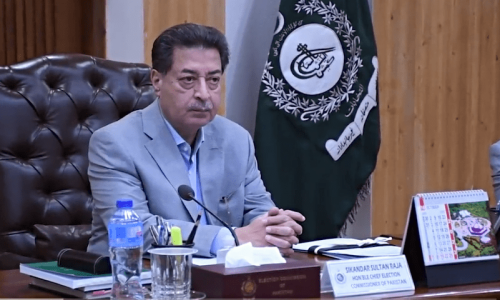
DESPITE having surpassed 75 years of independence, Pakistan has yet to establish a fool-proof electoral system.
The recent election day debacle, which exposed the ECP’s utter inability to transmit results on time due to a nationwide mobile phone network suspension, made evident inadequacies that have long plagued our poll infrastructure.
The 2018 elections were similarly marred by the breakdown of the much-vaunted Result Transmission System. These recurring issues have severely eroded public trust. A look at our neighbour to the east, India, is example enough of a robust election commission, which commands trust across the political spectrum.
This stands in stark contrast to the scepticism surrounding the ECP. This trust deficit is exacerbated by the reluctance of political parties to eschew alliances with entities inclined to manipulate poll outcomes. Once in parliament, these parties must prioritise the reinforcement of democratic norms and the ECP’s autonomy.
Two things are non-negotiable: an overhaul of Pakistan’s poll system and an end to interference from powerful quarters. The failure of the new Election Management System and the resultant chaos, with results still trickling in more than 24 hours after polling ended, necessitate technological and procedural reforms.
Moreover, the caretaker set-up not only failed to ensure neutrality, but also extended its mandate beyond its original scope — from dabbling in privatising the national carrier to booting out ‘illegal’ immigrants — further muddying the waters.
Drawing lessons from India, where the election commission operates with authority and independence even as the incumbent government continues with its limited powers, Pakistan could consider a model where the ECP is empowered to oversee elections without the need for a caretaker set-up.
This would of course require a transformation of the ECP, equipping it with autonomy, resources and the technological infrastructure needed to conduct elections efficiently and transparently. It is imperative for all political parties, civil society and the state to commit to these comprehensive reforms, which will doubtless be a legislative endeavour.
Strengthening the ECP and revisiting the caretaker government concept are pivotal steps towards ensuring that electoral integrity and democracy are allowed to take root and flourish in Pakistan.
The time has come to transition from an archaic, manipulated system to a modern, transparent, and accountable poll process that reflects the will of the people and strengthens Pakistan’s democratic foundations.
Published in Dawn, February 10th, 2024