



 0
0

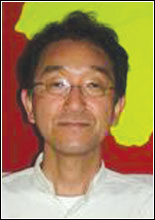 REPRESENTATIVES of Japanese civil society are not happy with their country’s current foreign policy that encourages “militarization” of Japan through participation in the so-called peace keeping in Iraq and providing financial assistance to those who are part of the US-led coalition there.
Concerned over this shift in his country’s policy is Koshida Kiyokazu, director of the Pacific Asian Resource Centre in Tokyo, who is at present in Karachi, doing research on privatization of water in urban and rural areas.
He feels that Japan’s commitment in Iraq and elsewhere and the use of official development assistance to countries involved in the global war on terrorism represent a departure from the past. He points out Japanese aid was suspended to Pakistan when it had conducted its nuclear tests. But after 9/11 when Pakistan agreed to play a pro-active role in the war on terror, this ban was lifted.
Mr. Kiyokazu wants Japan to change its present foreign policy and calls for using ODA for poverty alleviation projects. He feels that since 9/11 Japan has embarked on a course of “militarization” by committing troops and providing assistance to those engaged with America.
The fundamental challenge for peace advocates in Japan, he says, is to stop the unprincipled expansion of the country’s Self Defence Forces whose role now goes far beyond “minimum defence”. Japanese peace activists emphasize the need for promoting peaceful conflict prevention, disarmament and non-proliferation as well as by addressing poverty, economic injustice, human rights violations and other root causes of conflict and arms races.
Mr. Kiyokazu also runs an NGO, Research Institute for Civil Society, which has been involved in rehabilitation activities in East Timor after the referendum. A novel way of supporting the East Timorese was adopted to make them economically self-reliant. In association with a local NGO it was decided to support the coffee growers of East Timor by purchasing their beans at a higher price and exporting them to Japan.
In Sri Lanka his NGO has been working with the fisherfolk in Jafna in the LTTE area since the tsunami devastation.
Mr. Kiyokazu believes that the forthcoming gathering of the World Social Forum in Karachi from March 24 to 29 will provide a platform for discussing the various issues confronting the world and the region. About 10 Japanese activists belonging to his organization will be coming to attend the forum.
He emphasized that the event was taking place at a time when the world at large and region in particular was facing turmoil due to unilateralism, extremism, militarization and denial of rights of all sorts to the people.




























