• Tehran vows to retaliate Tel Aviv’s ‘organised terrorism’
• Attack marks the second high-profile assassination in Syria by Israel in a month
DAMASCUS: An Israeli strike on Damascus killed the Iranian Revolutionary Guards Corps’s (IRGC) spy chief for Syria and four other Guards members on Saturday, Tehran said, in an attack that tore into a multi-storey residential building.
Iran condemned the strike as a “desperate attempt to spread instability in region”, state media reported.
“Iran...reserves its right to respond to the organised terrorism of the fake Zionist regime at the appropriate time and place,” foreign ministry spokesperson Nasser Kanaani said.
The Syrian Observatory for Human Rights (SOHR), a Britain-based monitor, said 10 people were killed in the Israeli strike on the Mazzeh neighbourhood of the Syrian capital.
The Mazzeh area is also home to the United Nations headquarters, embassies and restaurants.
In recent weeks, Israel has been accused of intensifying strikes on senior Iranian and allied figures in Syria and Lebanon — backers of Hamas — raising fears the Gaza crisis could expand.
“The Revolutionary Guards’ Syria intelligence chief, his deputy and three other Guards members were martyred in the attack on Syria by Israel,” Iran’s Mehr news agency said, quoting an informed source.
In a statement, the IRGC confirmed it lost five of its members in the strike that it accused Israel of carrying out.
The Guards’ Sepah news agency said in an early report the “evil and criminal Zionist regime (Israel)” killed four of its military advisers. It identified them as Hojatollah Omidvar, Ali Aghazadeh, Hossein Mohammadi and Saeed Karimi.
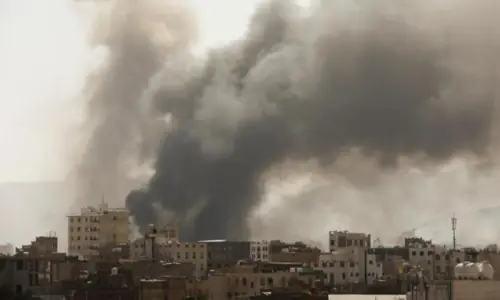
The mid-morning strike, which caused a large plume of smoke to billow into the sky, was also reported by Syrian state media.
The war-torn country’s official news agency, SANA, said a residential building in Damascus’s Mazzeh neighbourhood had been targeted in the Israeli aggression.
The Syrian defence ministry said the strike killed “a number of civilians”.
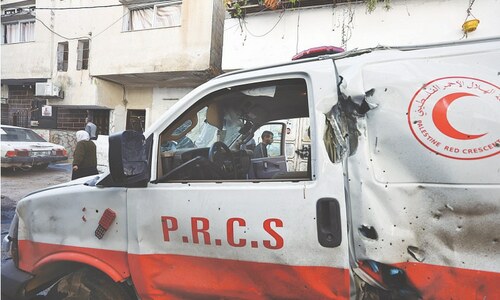
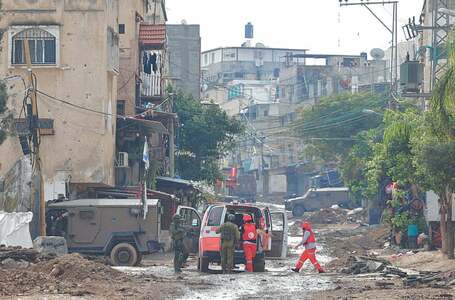
A journalist at the scene said the building had been reduced to a heap of debris. It was cordoned off with ambulances, firefighters and Red Crescent teams on site as rescuers searched for survivors.
“I heard the explosion clearly in the western Mazzeh area, and I saw a large cloud of smoke,” a resident said.
“The sound was similar to a missile explosion, and minutes later I heard the sound of ambulances,” he added.
When asked about the strike, the Israeli army said: “We do not comment on reports from the foreign media.”
During more than a decade of civil war in Syria, Israel has launched hundreds of air strikes on its territory, primarily targeting Iran-backed anti-government forces as well as on Syrian army positions.
But it has intensified attacks since the crisis in Gaza erupted in October.
“They were for sure targeting senior members” of Tehran-backed groups or Iranian forces, Abdel Rahman said.
Exchanges of fire
Saturday’s Israeli strike was its second high-profile targeted assassination in Syria in less than a month.
Last month, an Israeli air strike killed a senior Iranian general in Syria, the military force said.
Razi Moussavi was the most senior commander of the Guards’ foreign operations arm, the Quds Force, to be killed outside Iran since a US drone strike in Baghdad killed the Force’s commander, Qasem Soleimani, on Jan 3, 2020.
On Jan 2 in neighbouring Lebanon, where the powerful Iran-backed Hezbollah holds sway, Hamas deputy Saleh al Aruri was killed in a strike widely blamed on Israel.
Days later, Israel killed top Hezbollah commander Wissam Tawil in a strike on his car in south Lebanon.
Recent months have also seen regular cross-border exchanges of fire between Israel and Hezbollah in southern Lebanon.
Israel rarely comments on individual strikes targeting Syria, but it has repeatedly said it will not allow Iran, which backs President Bashar Al Assad’s government, to expand its presence there.
Published in Dawn, January 21st, 2024