• Lai stresses cooperation and dialogue with Beijing on ‘equal basis’
• China vows not to give up on achieving ‘reunification’ of the territory
• Biden says US does not support independence of Taiwan
• Russia insists it continues to view the island as an integral part of China
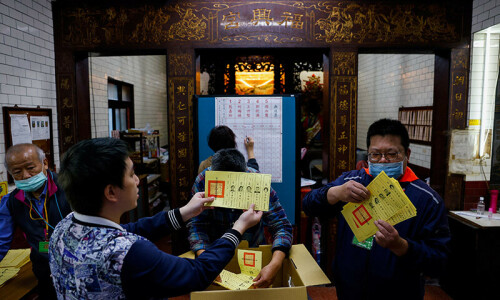
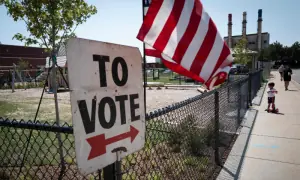
TAIPEI: Taiwanese voters swept the ruling Democratic Progressive Party’s (DPP) presidential candidate Lai Ching-te into power on Saturday, while China said it would not give up on achieving “reunification”.
Lai’s party, which champions Taiwan’s separate identity, was seeking a third successive four-year term, unprecedented under Taiwan’s current electoral system. He emphasised the need for cooperation and dialogue with Beijing on an ‘equal basis’.
However, in a measure of public frustration at domestic issues like the high cost of housing and stagnating wages after eight years in power, the DPP lost its majority in parliament, making Lai’s job harder in passing legislation.
Lai won only 40 per cent of the vote in Taiwan’s first-past-the-post system, unlike current President Tsai Ing-wen who was re-elected by a landslide four years ago with more than 50pc of the vote.
China’s Taiwan Affairs Office struck a gentler tone in its response to Lai’s election and did not mention him by name, saying that the results reveal the DPP “cannot represent the mainstream public opinion” on Taiwan.
“Our stance on resolving the Taiwan question and realising national reunification remains consistent, and our determination is as firm as a rock,” it said.
However, it added, China will work with “relevant political parties, groups and people” from Taiwan to boost exchanges and cooperation, and “advance the peaceful development of cross-strait relations as well as the cause of national reunification”.
China believes in One China policy and rejects Taiwan elections. Beijing has framed the elections as a choice between “peace and war”, calling the DPP dangerous separatists and urging Taiwanese to make the “right choice”.
China’s defence ministry, responding to a question on Friday on Taiwan’s air force upgrading F-16 fighter jets and buying more from the United States, said even with purchases of US weapons the DPP “cannot stop the trend of complete reunification of the motherland”.
“The Chinese People’s Liberation Army remains on high alert at all times and will take all necessary measures to resolutely crush any form of ‘Taiwan independence’ separatist plots and firmly defend national sovereignty and territorial integrity,” said ministry spokesperson Zhang Xiaogang.
The United States, the European Union, the United Kingdom, and Japan congratulated Lai on winning the presidential election.
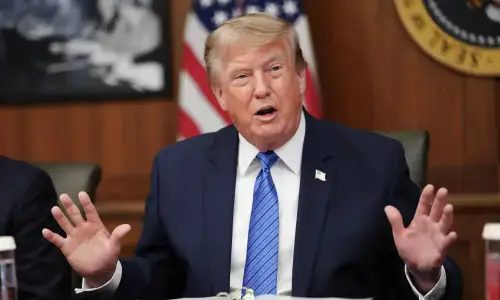
President Joe Biden said the United States does not support the independence of Taiwan. “We do not support independence...” Biden said, when asked for reaction to Saturday’s elections.
Russian foreign ministry’s spokeswoman Maria Zakharova, commenting after the vote, said Moscow continued to view Taiwan as an integral part of China.
British Foreign Secretary David Cameron said he hoped Taiwan and China would renew efforts to resolve their differences peacefully. “I hope that the two sides of the Taiwan Strait will renew efforts to resolve differences peacefully through constructive dialogue, without the threat or use of force or coercion,” he said in a statement.
There were jubilant scenes among a sea of cheering supporters outside Lai’s campaign headquarters.
Domestic challenges
Lai admitted that after losing its parliamentary majority, the DPP had “many areas that need improvement”. However, he offered an olive branch to his opponents in saying he would include talent from their parties.
Lai said he would cooperate with his electoral rivals, Hou Yu-ih of Taiwan’s largest opposition party, the Kuomintang (KMT), and former Taipei mayor Ko Wen-je of the Taiwan Peoples Party (TPP), in resolving the problems Taiwan faces.
Taiwan’s media reported the DPP won 51 seats to the KMT’s 52, while the TPP got eight.
Ko appeared open to working with Lai. “The TPP will play the role of a critical minority, without fixing who we collaborate with,” Ko told reporters after conceding.
Published in Dawn, January 14th, 2024