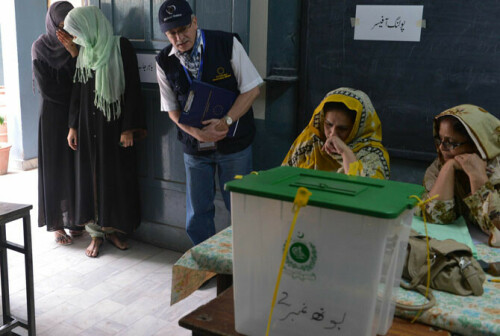
ISLAMABAD: The Centre for Peace and Development Initiatives (CPDI) in a report claimed that lack of Computerised National Identity Cards (CNICs) and damaged pathways to polling stations jeopardise participation of the flood-affected communities in the upcoming general elections.
A study by CPDI, conducted in Sindh and Balochistan, identifies multiple issues of flood-affected communities which may adversely affect the voter turnout. It shows key issues, notably the absence of CNICs and damaged pathways to potential polling stations or school buildings.
While highlighting the issues, CPDI urged authorities to take immediate measures to facilitate voter turnout in the flood-affected areas specifically in Khairpur, Naushahro Feroz, Naseerabad and Jaffarabad.
The qualitative assessment was undertaken in the severely affected provinces of Sindh and Balochistan, highlighting various critical issues, including the absence and delays in obtaining national identity cards, damaged infrastructure such as roads and designated polling stations/school buildings, waning interest in political leaders due to insufficient post-disaster rehabilitation efforts, and concerns about the displaced community’s return to exercise their voting rights.
Additionally, individuals with lifelong injuries may be bedridden, posing a challenge for their participation in the general election (GE) 2024. These findings underscore the multifaceted challenges affecting the electoral landscape in flood-affected regions.
A significant number of flood victims lost their CNICs (at least one in every household), delays in renewal of CNICs are primarily because of the crowded and limited number of Nadra centres established at village level, residents added that mobile registration vans of Nadra initially helped but were later discontinued.
“Furthermore, daily wage earners also find it financially burdensome to visit Nadra centres. CPDI urges the authorities to take immediate action to ensure that eligible voters in flood-affected regions receive their CNICs before elections. Moreover, damaged roads and access tracks force voters to take longer alternative routes to reach polling stations, reported in all villages of selected districts in Sindh and Balochistan.
“Increased distances, combined with high transportation costs, will likely discourage voters, particularly women, elderly, differently-abled and low-income individuals, from travelling to cast their votes. With over 40pc of school buildings damaged and incomplete recovery efforts, newly designated polling stations may be distant, posing accessibility challenges for flood-affected residents on polling day without adequate transportation,” the report stated.
Over 10 million individuals faced displacement and 2.1 million homes were damaged in Sindh and approximately 100,000 in Balochistan, findings of the report reveal that due to financial constraints, there is a possibility that low-income migrated families will not return to cast their votes.
Published in Dawn, January 12th, 2024