YESTERDAY, Article 62 was, hopefully permanently, devenomised of its most lethal effect: lifetime disqualification of a lawmaker from holding public office.
Though several problematic ‘morality’ requirements in Articles 62 and 63 had been inserted in the Constitution during the Zia era, the ‘lifetime disqualification’ aspect under 62(1)(f) was a more recent innovation — one that happened five years ago, when the Supreme Court interpreted the clause to deem anyone legally determined to have failed the ‘sadiq’ and ‘ameen’ test to have lost forever the right to lead the people of Pakistan as an elected representative.
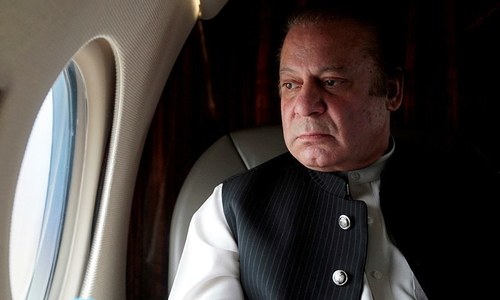
The verdict had been met with immediate outrage, and it was seen widely as the state hammering the final nails in the coffin meant for Nawaz Sharif’s political career.
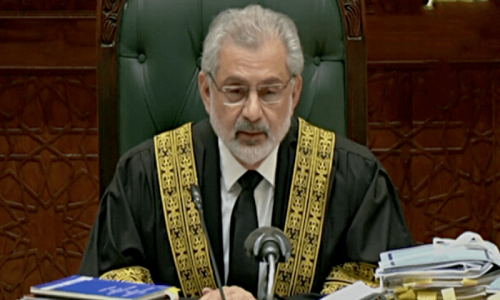
Yesterday, the Supreme Court finally undid its earlier mistake. A new set of judges agreed, by a majority of 6-1, that the old bench had overreached by ‘reading into’ the Constitution while taking a rather expansive view of how the clause ought to be interpreted.
The new bench noted that there is no “law that provides for the procedure, process and the identification of the court of law for making the declaration mentioned in Article 62(1)(f) of the Constitution and the duration of such a declaration, for the purpose of disqualification thereunder, to meet the requirements of the fundamental right to a fair trial and due process guaranteed by Article 10A of the Constitution.”
It declared that till the law is updated to address these deficiencies, disqualification under Article 62(1)(f) cannot hold for life. Positive as the news is, it should be pointed out that the clause remains very much intact.
It remains up to an elected government to, either with consensus or two-thirds majority, undo it. All the court has done is ensure it won’t be used as Damocles’ sword over a condemned politician’s neck.
It has long been argued, and by better legal minds, that the eligibility requirements for holding public office as currently laid out in the Constitution contain several provisions that are patently unrealistic or impossible to attain and must, therefore, be reconsidered.
This publication has long agreed with this view. There is nothing wrong with expecting national leaders to adhere to a high standard of conduct; however, when ‘requirements’ for qualification start demanding personality traits based on ideas of morality that will be interpreted very differently by different people, they lose their purpose altogether.
It cannot be up to the law to choose, based on such arbitrary conditions, who is and who isn’t ‘morally deserving’ of leadership and who, therefore, is to be allowed to participate in the electoral process. Such decisions should be left to the judgment of the voting citizenry.
Published in Dawn, January 9th, 2024