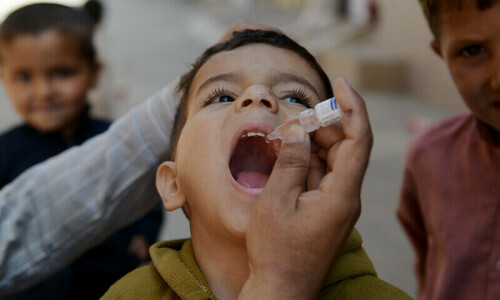
QUETTA: In the face of multiple challenges, Balochistan has defied the odds, maintaining its polio-free status for nearly three years as the last case was detected in January 2021.
Despite encountering positive environmental samples, the resilient efforts of the region have kept the poliovirus at bay. This remarkable accomplishment serves as a testament to the dedication and hard work of various stakeholders, ranging from healthcare professionals, religious scholars, tribal notables to community members.
Balochistan’s success is not merely a statistical triumph but is evident in the dwindling numbers of vaccine refusals, which decreased by 33 per cent in Quetta block. The children who are persistently missing the vaccination dose for consecutively three or more campaigns were reduced by 49 per cent in Quetta block districts (Chaman, Qila Abdullah, Pishin and Quetta).
Around 10,000 children were identified and vaccinated against crippling polio disease which was previously hidden by the parents due to misconception about polio vaccine. Seventy-one per cent zero dose children vaccinated in Quetta block through extended outreach activities and on EPI sites.
These positive indicators reflect a robust surveillance and vaccination strategy that has successfully navigated the intricate landscape of healthcare delivery. Against the backdrop of harsh weather conditions and persistent security challenges, the unsung heroes of the polio eradication initiative are the frontline polio workers specially the women.
These dedicated individuals ensure that no child is left unvaccinated. Their commitment, often in the face of adversity, exemplifies the spirit of perseverance required to tackle a public health crisis of this magnitude.
“We saw how these brave females dedicatedly work during the campaign. There are mothers who often carry their little children even in harsh weather as no one is at home to take care off. We have seen female workers coming with their fathers and brothers in the field on motorbikes and tractors. Many have to cover miles and miles on foot in tough terrain.
“Hats off to them, their dedication is truly exemplary. With their efforts, we were able to reduce the number of refusals by 33 per cent in the year 2023,” said Shahpur Suleman, Social Behavioral Change Specialist, Unicef Balochistan.
Published in Dawn, January 8th, 2024