Bangladesh PM Hasina votes in general election boycotted by opponents


Bangladesh Prime Minister Sheikh Hasina cast her vote on Sunday soon after polls opened in a general election boycotted by the main opposition party and which is set to give the ruling Awami League-led alliance a fourth straight term in power.
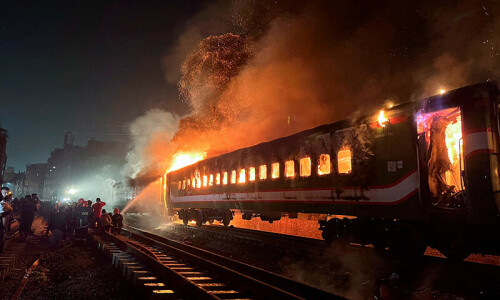
At least four people were killed late on Friday night in a passenger train fire that the government called arson, after several polling booths, schools and a Buddhist monastery were set ablaze days before the election.
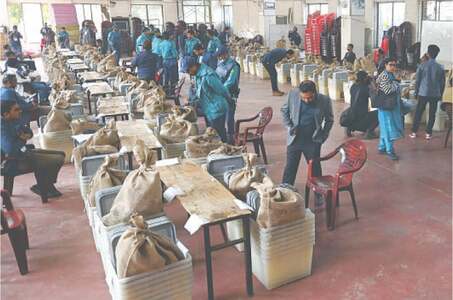
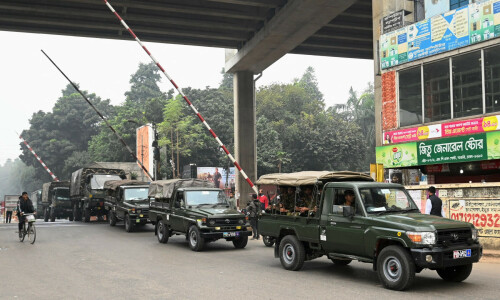
There were no reports of violence on voting day, however, as nearly 800,000 security forces guard polling booths, assisted by troops nationwide.
Accompanied by her daughter and other members of her family, Hasina voted at City College in the capital, Dhaka, minutes after polling began at 8am (0200 GMT). Polling will run for eight hours, followed by the counting of votes and initial results are expected early on Monday.
“Bangladesh is a sovereign country and people are my power,” Hasina said after voting, adding that she hoped her party would win the people’s mandate, which would give it a fifth term.
“I am trying my best to ensure that democracy should continue in this country.”
Rights groups have warned the country of 170 million is headed for virtual one-party rule after the boycott by the Bangladesh Nationalist Party (BNP) and some smaller allies.
The United States and Western nations, key customers of its garment industry, have called for a free and fair election — the 12th since independence from Pakistan in 1971.
About 120 million voters will choose from nearly 2,000 candidates for 300 directly elected parliamentary seats. There are 436 independent candidates, the most since 2001.
Voter turnout was low during early hours amid the chill and fog of a winter morning but it picked up as the day progressed with people queuing up outside polling booths, according to Reuters witnesses.
“PM Hasina has done a lot for the country. I’ll vote for her party,” said Anowar Hossain, 55, as he walked back home after buying vegetables from a nearby market in Dhaka.
College teacher Zayeda Begum, 55, was among dozens of women at a polling booth in the capital. She said she was happy with how Bangladesh was progressing, adding that she had cast her vote in favour of the ruling party.
The opposition BNP, with its top leaders either in jail or exile, says the Awami League has propped up “dummy” candidates as independents to try to make the election look credible, a claim the ruling party denies.
The BNP, which also boycotted the 2014 poll though it took part in 2018, has asked people to shun Sunday’s election and called a two-day strike nationwide from Saturday.
Hasina, who refused BNP demands to resign and cede power to a neutral authority to run the election, accuses the opposition of instigating anti-government protests that have rocked Dhaka since late October and killed at least 14 people.
Hasina said she did not need to prove the credibility of the election to anyone. “What is important is if the people of Bangladesh will accept this election.”
In her last 15 years in power, Hasina, 76, has been credited with turning around Bangladesh’s economy and the garment industry. But critics have also accused her of authoritarianism, human rights violations, crackdowns on free speech and suppression of dissent.
The economy has slowed sharply since the Russia-Ukraine war pushed up prices of fuel and food imports, forcing Bangladesh to turn last year to the International Monetary Fund for a bailout of $4.7 billion.