ADDIS ABABA: Ethiopia on Monday struck a “historic” agreement to secure a stake in the main port in Somalia’s breakaway region of Somaliland as the landlocked country eyes more access to the sea, officials said.
The deal on Somaliland’s Berbera port comes months after Ethiopian Prime Minister Abiy Ahmed said the country should assert its right to access the Red Sea, rousing regional concerns.
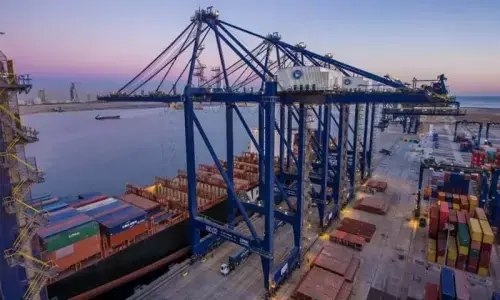
On the southern coast of the Gulf of Aden, Berbera offers an African base at the entrance to the Red Sea and the gateway to the Suez canal.
Ethiopia — Africa’s second most populous country — was cut off from the coast after Eritrea broke away from Addis Ababa and formally declared independence in 1993 following a three-decade war.
It enjoyed access to a port in Eritrea until the two countries went to war in 1998-2000 and since then Ethiopia funnels most of its trade through Djibouti.
The “historic” memorandum of understanding (MOU) between Ethiopia and Hargeisa was signed by Abiy and Somaliland leader Muse Bihi Abdi in Addis Ababa, Abiy’s office said.
The agreement “shall pave the way to realise the aspiration of Ethiopia to secure access to the sea and diversify its access to seaport,” the office said in a statement posted on X, formerly Twitter.
“It also strengthens their security, economic and political partnership.” The size of the stake in the port was not immediately clear.
In a televised speech on October last year, Abiy said Ethiopia “is a nation whose existence was tied to the Red Sea” and that it needed access to a port.
The remarks sparked concerns among observers, particularly against a backdrop of apparent tensions with Eritrea.
But he sought to alleviate the fears and vowed in November not to invade any neighbouring country, while insisting his government would not abandon its demand for port access.
Ethiopia’s economy has been constrained by its lack of access to the Red Sea, a narrow strip of water between Africa and the Arabian Peninsula.
In 2018, Ethiopia acquired a 19 per cent stake in Berbera port, according to Dubai-based DP World, which manages the port’s operations.
The company holds a 51-per cent stake, while Somaliland has the remaining 30 per cent.
Berbera Port at the mouth of Red Sea is considered a gateway to Suez Canal
Somaliland — a former British protectorate with 4.5 million people — has a long coastline on the Gulf of Aden.
It prints its own currency, issues its own passports and elects its own government but its quest for statehood has gone unrecognised, leaving it poor and isolated.
Published in Dawn, January 2nd, 2024