Truce brings respite but not normality for Gazans

KHAN YUNIS: Under a night sky illuminated by moonlight rather than flares and explosions, Gaza resident Ibrahim Kaninch sat by a small bonfire outside his partially destroyed house, feeding the flames with bits of cardboard as he heated up water for tea.
The peaceful scene, on the second night of a temporary truce between Israel and Hamas, was a moment of respite and reflection for Kaninch, who like other Gazans has endured fear and hardship since Oct 7.
“Were living days of calm, where we are stealing moments to make tea,” he said, his face lit in warm colours by the glow of the fire.
“These truce days have allowed people to have a bit of social communication and to check on their families and friends and their houses.” Kaninch lives in Khan Yunis, a town in the southern Gaza Strip where tens of thousands of people have sought refuge in tents, schools and residents’ homes after fleeing heavy bombardment in the northern half of the territory.
However, air strikes have also hit many targets in the south, and Kaninch said the constant terror and the sound of military jets and explosions made it impossible to have a quiet evening whether inside or out, until the truce.
He was enjoying the break from the fear and noise, but with his home badly damaged by a strike the situation was still very far from normal. Kaninch mused that the war had revived aspects of the lifestyle of earlier generations.
“We’ve lost this kind of gathering around the fire years ago, but the exceptional status of war that were currently experiencing has brought back some of the heritage and the social culture that our ancestors used to have,” he said.
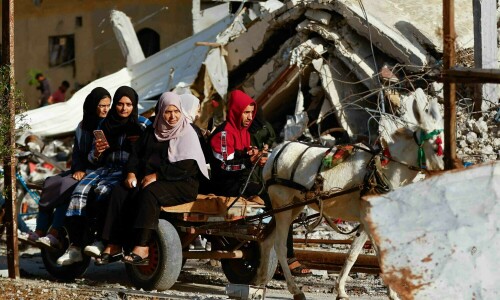
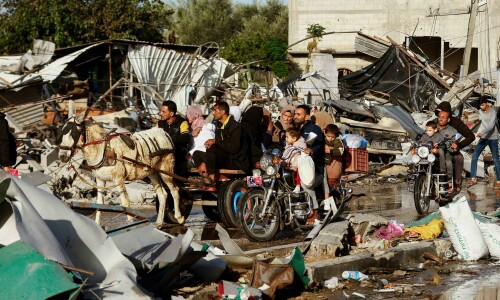
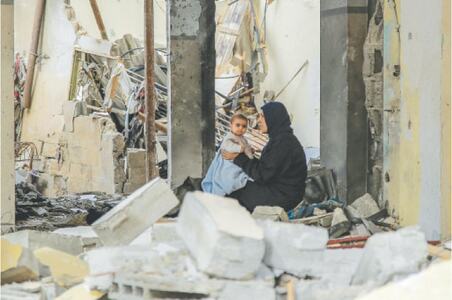
Nearby, a man pushing a bicycle and a woman carrying a baby strolled side by side in the darkened street as the call to prayer could be heard faintly in the distance. The headlights of a passing car briefly lit up piles of rubble on the street and graffiti on the walls.
“We ask ourselves what’s next? There’s no electricity or water, there are shortages of all basic human needs,” said Kaninch. “We ask God to let people’s lives resume and go back to safety, peace and prosperity.”
Published in Dawn, November 27th, 2023