Experts call for using predictive AI cybersecurity to thwart attacks


 0
0


• Pakistan is not ready for cyber warfare, PIIA conference told
• Expert says those who believed their privacy remained intact in cyberspace lived in imaginary world
KARACHI: Experts at a conference on Saturday said that the country was more than 20 years behind the world in the field of digital security and it must move forward on a very fast track by adopting predictive cybersecurity infused with Artificial Intelligence in order to have a standing in the world of information in cyberspace.
The conference — Artificial Intelligence (AI) for Cyber Security — was organised by the Pakistan Institute of International Affairs (PIIA) here.
There was a consensus among speakers that awareness of cybersecurity must be spread through educational institutions, particularly universities, and webinars and seminars should be conducted to make the general public aware of the challenges.
They were also of the view that the government should also let people work freely to bring required changes in the field.
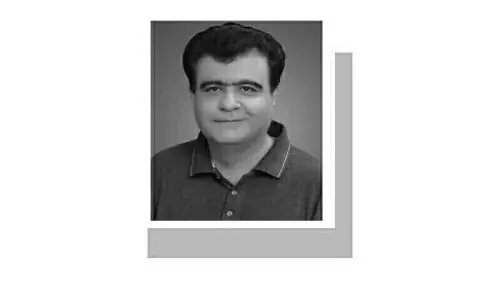
Speaking on the occasion, Ammar Hussain Jaffri, a former senior official of the Federal Investigation Agency (FIA) who also headed the National Response Centre for Cyber Crime (N3RC), said that he had been working on cybersecurity for the past 20 years.
“When I started working in the cybercrime unit of FIA 20 years ago we were ahead of India considering the initiatives we took for cybersecurity. But right now, we are even behind the place where we were standing 20 years ago,” he said.
“Pakistan has been working on reactive cybersecurity up till now, but it’s time we start looking into predictive cybersecurity, which needs to be infused with AI, where possible attacks are predicted and the results are also accurate up to 90 per cent,” he said.
He shared that through AI, they looked into the matter of fake passports and detected anomalies in the system of the National Database and Registration Authority (Nadra) where people with fake passports were entered in random family trees to have a record.
Rahim Ali, chief technology officer of an international business outsourcing firm, said that Pakistan was not ready for cyber warfare, but it did not have an option to be not ready for it.
Explaining the complexity of the cybersecurity and its combination with the AI, he said that cybersecurity was not only for computers.
“Let me paint a picture of a cyber attack. First, your networks are compromised and you lose connection with everyone. Then the electronic media is stopped so you can’t see what’s happening on the ground. Utilities and public infrastructure are destroyed. The idea is to either steal, sabotage or compromise,” he explained.
“It is called ‘fire sale’ in cybersecurity. In this, a country’s infrastructure is systematically disengaged,” he said.
He gave another example of how there was a plan to assassinate the head of a country without sending an assassin to kill him.
“The plan was to hack the pacemaker, installed in the heart of that country’s head, and increase its current which could alter the heartbeat and kill him,” he added.
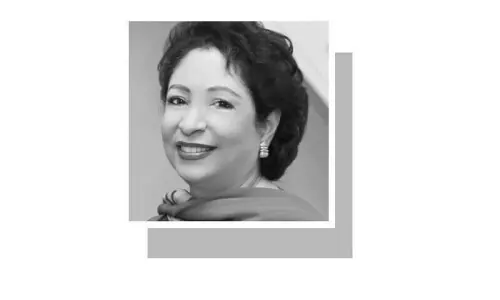
Maliha Masood, another IT professional and expert in risk management, information security management, internal audit and software quality assurance, shared that like all the other fields, the cyberspace also had good and bad actors.
“The problem with good actors is that they need to abide by many rules and standards. Whereas, the bad actors are free to do whatever they can. So, they limit many procedures for cybersecurity experts,” she said.
She said that the people who were in the cyberspace in any capacity and thought that their privacy remained intact, they were living in an imaginary world.
The experts also discussed how modern weapons could be altered and manipulated through AI, which was why it was important to have indigenous weaponry so the risks of manipulations could be minimised.
PIIA chairperson Dr Masuma Hasan thanked the panellists in her closing remarks.
Dr Muazzam A. Khan Khattak of the Institute of Electrical and Electronic Engineers, Dr Waqas Haider Khan Bangyal of Kohsar University’s Department of Computer Science, Dr Nudrat Nida of National University of Sciences and Technology delivered speeches at the inaugural session of the day-long conference.
Published in Dawn, November 12th, 2023