PESHAWAR: With a significant increase in the markhor population in northern parts of Khyber Pakhtunkhwa, the provincial government has planned to request the international regulator for trade in endangered animals to increase its annual quota for trophy hunting of the large Himalayan goat from the existing four to nine.
The request will be put up by the province’s climate change, forestry and wildlife department to the Secretariat of the United Nations’ Convention on International Trade in Endangered Species (Cites) through the federal ministry of climate change and environmental coordination, insisting the markhor hunting quota increase will provide the “maximum financial support” to the local communities, according to officials.
Every year, the wildlife department generates millions of rupees through the auction of licences to haunt four aged markhors in northern parts of the province.
It recently auctioned those hunting licences for Rs182.4 million.
Officials insist markhor population goes up from 700 in 2004 to 5,621
The officials said that 80 per cent of the proceeds from such trophy hunting programme were distributed to the local communities and that the funds were transferred to their bank accounts for community development and wildlife conservation activities in the respective villages, while the rest of the amount went to the government.
Officials in the wildlife department told Dawn that the Cites allowed KP in 1998 to haunt three markhors every year and increased the number to four in 2004 as the population of the large goat reached around 700.
They said that according to the international standards the harvesting quota of markhor and other animals is one per cent of the total population, adding keeping in view of that criteria, the wildlife department wanted to increase the number of licences for markhor hunting.
They said on average, markhor lived for 10-13 years in mountains and for around 20 years in cages.
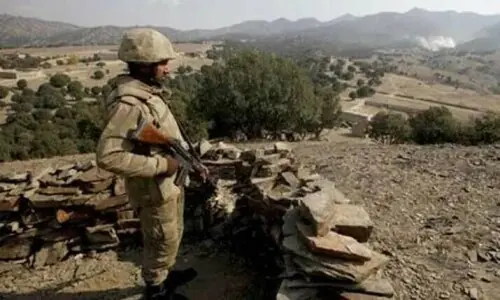
The officials said markhors mostly lived in the marginal agricultural areas in high hills of Chitral, Swat, Upper and Lower Kohistan, and Kolai-Palas districts.
“Markhor trophy hunting programme is not a programme simply to hunt markhor and instead, there is a whole philosophy behind conserving the wild population of Markhor through active involvement of local communities,” read the minutes of a recent meeting held on the matter.
The minutes added that such “unique” programmes were common in different countries, including Pakistan, so the Cites Secretariat had allocated quota to various parties and states.
“Besides, such a programme is also a typical example of sustainable use of certain components of biodiversity as envisaged in Conservation on Biological Diversity to which Pakistan is signatory. Rationale for trophy hunting programme is used as a conservation tool as trophy hunting is being practiced primarily as an economic incentive for the custodian community as the target watersheds to help in the protection of mountain ungulates from local and outsider hunters and undertake social development activities.”
Officials said the markhor population was on the decline prompting the wildlife department to start the large goat’s conservation in 1998 through local communities, which increased the population to 5,621 at the moment.
They said initially, the wildlife department had proposed the hunting of 12 markhors, which was reduced to 9 in the meeting of the “scientific authority” at the provincial level.
They added that the scientific authority was headed by the chief conservator of the wildlife department, while the chairman of the zoology department of the University of Peshawar, representative of the World Wildlife Fund and a wildlife expert were members of the authority.
The officials said the scientific authority recommended to the “management authority” at the federal ministry of climate change and environmental coordination for taking up the markhor hunting quota matter with the Cites.
Published in Dawn, November 6th, 2023