0
0

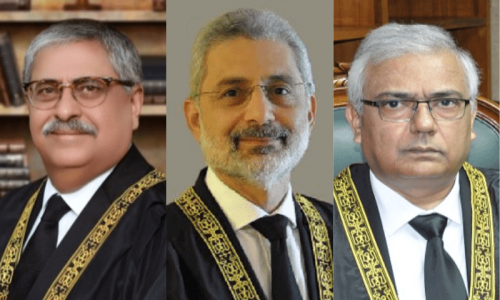
ISLAMABAD: Chief Justice Qazi Faez Isa has lamented that a decision on the date for general elections should have been made by the president and the Election Commission of Pakistan (ECP), and the matter was “unnecessarily” brought to the court.
The observation was made in the detailed order of Friday’s hearing on petitions seeking a date for the general elections.
“A matter which should have been dealt with by the President and the ECP was quite unnecessarily brought to this Court,” the CJP said in the verdict issued on Saturday.
He added that the court was “fully aware of our constitutional jurisdiction” and was “careful not to encroach on the jurisdiction of the President, nor that of the ECP”.
Says matter should have been decided by ECP and president
On Thursday, the Supreme Court directed the electoral watchdog to decide an election date in consultation with the president.
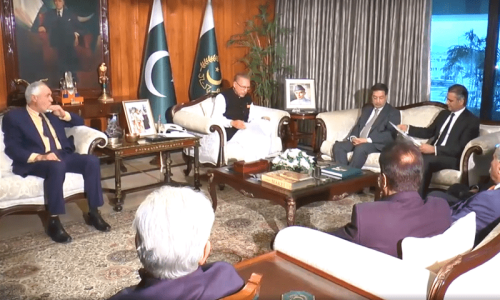
Later that day, an ECP delegation, headed by Chief Election Commissioner Sikander Sultan Raja, met President Arif Alvi at the Aiwan-i-Sadr and agreed on holding general elections on February 8.
The court also raised questions over how the affairs of the state were being run.
It said that in one of the three petitions, the president was named as ‘a respondent’, along with a screenshot of his post on X in which he sought the ECP’s views on the issue.
“[It] leads one to question whether the country can be run on the basis of messaging on social media.”
The court, in its order, also said freedom of the press granted under Article 19 of the Constitution has been misused to spread disinformation.
“But some have construed this freedom as a licence to disinform and build a false narrative, and do so to undermine democracy,” the judgement stated while acknowledging the role of the media.
The Pemra prohibits content which ‘incites or condones dislodgment of democratic setup against the command of the Constitution, the CJP said, adding that decreased confidence in democracy “diminishes people’s engagement with it and suppresses voter turnout as well threatens the freedom of thought“.
However, the Supreme Court appreciates those in the media who perform their duties professionally and truthfully. While concluding the detailed order, the Supreme Court also cited a study conducted by the European Parliament and found that: ‘Disinformation also has far-reaching implications for human rights and democratic norms worldwide. It threatens freedom of thought, the right to privacy and the right to democratic participation, as well as endangering a range of economic, social and cultural rights. It also diminishes broader indicators of democratic quality, unsettling citizens’ faith in democratic institutions not only by distorting free and fair elections, but also fomenting digital violence and repression.’
Published in Dawn, November 5th, 2023