0
0

• Local currency falls against dollar for fourth day in a row
• SBP’s reserves hit lowest level since mid-July
KARACHI: The rupee’s rally triggered in early September by a government clampdown on smuggling and hoarding of foreign currency might prove to be short-lived due to its financing risks, Goldman Sachs Group Inc. has warned.
“The recent appreciation of the Pakistani rupee will likely be short-lived, given soaring interest costs and only short-term arrangements with the International Monetary Fund and bilateral financing to support the external balance,” Goldman analysts wrote in a Wednesday report, according to Bloomberg.
They said the market would continue to require a premium for the rupee ahead of elections.
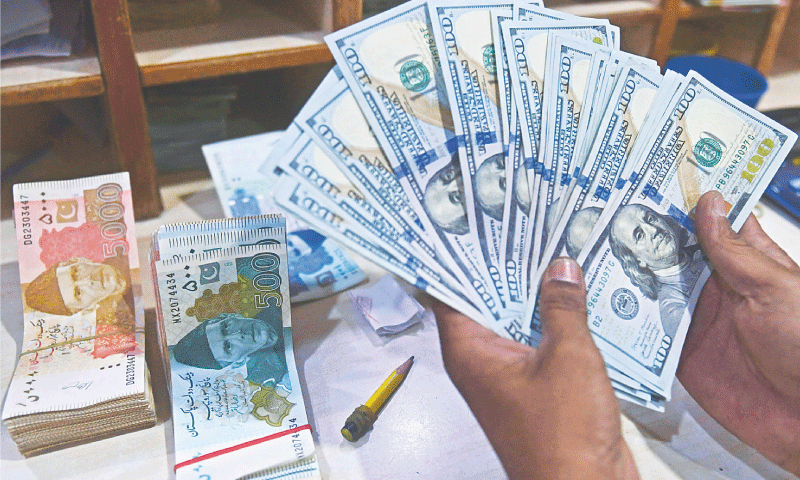
The warning came as the rupee lost its value against the US dollar for the fourth day in a row, falling by 0.07 per cent to close at 280.09 on Thursday.
Also, the State Bank of Pakistan (SBP) reported on Thursday that its foreign exchange reserves plummeted $220 million to $7.49 billion for the week ending Oct 20 — the lowest weekly position since mid-July when a big financial boost from the IMF and friendly countries doubled the SBP’s holdings to $8.73bn.
During September and most of October, the rupee kept appreciating and has been declared among the world’s best-performing currencies.
Currency analysts have been warning that the rupee’s surge has weak fundamentals and that it may reverse with slight shocks in the market.
After hitting a record low of Rs307.1 against the dollar on Sept 5, the rupee started a sharp recovery after the country’s financial regulator and security agencies began taking action the next day to curb black market operations.
From Sept 6 to Oct 16, the rupee rose against the dollar every single day, overall gaining 10.9pc against the US dollar to Rs277.03.
However, the SBP could not improve its foreign exchange position in the meantime, except for the inflows it received from Saudi Arabia and the UAE after securing a short-term loan arrangement with the IMF in July.
The central bank kept buying dollars from the banking market, but the outflows remained higher due to debt servicing.
The economic and political uncertainty that began in the country 18 months ago still looms large. While the general elections are expected next year, the nation’s chances to invite large foreign investments against its sellable units look slim.
The country has planned to sell out some profitable costly units to Middle East investors, but the crisis in that region amid Israel’s aggression in Gaza has only delayed those plans.
Meanwhile, currency experts in the banking industry say there is no chance of higher export growth, mainly due to a high interest rate and inflation, which made the cost of production uncompetitive for exporters.
Published in Dawn, October 27th, 2023