Awizard with words, film-writer and director Riaz Shahid believed that a well-made film had the power to change lives. Despite being the name behind a few anti-imperialist Lollywood films, he was equally at ease with social issues: Neend (1959) addressed sexual exploitation, followed by Rivaaj (1965) and Maa Baap (1967), which highlighted class division and respect for elders.
But Riaz Shahid always wanted to address the strained saas-bahu relationship existing in society. Knowing that a thin line exists between a mother’s affection and a mother-in-law’s wrath, Riaz wrote Bahisht [Paradise], to show how to avoid such clashes.
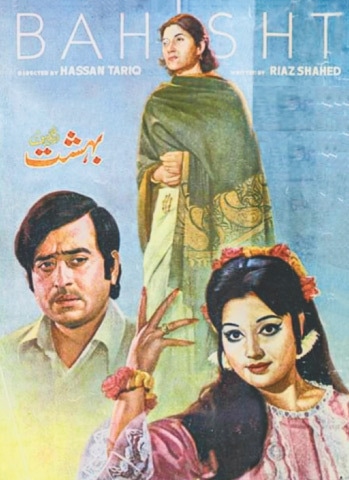
Bahisht’s story revolves around three main characters, Rehana (Nisho), Khalid (Nadeem) and Sarkar Maa (Nayyar Sultana). A well-respected figure in the neighbourhood, Sarkar Maa is looked up to and her decisions always honoured and complied with.
A widow, Sarkar Maa lives with her son (Nadeem) and an unmarried brother (Afzaal Ahmed). Rehana and Khalid were lovebirds in college who then become a married couple through an arranged marriage. Sarkar Maa soon notices the divided attention of her son, now also a husband.
The story of writer-director Riaz Shahid’s Bahisht is still relevant and what he penned over 50 years ago is still the norm in Pakistani and Indian television dramas and fi lms even today
The ill-treatment of her own daughter (Saiqa) by her mother-in-law (Tamanna), triggers the traditional saas [mother-in-law] in Sarkaar Maa, leading to trouble in paradise. Rehana, as the dutiful daughter-in-law, bears the full brunt of Sarkar Maa, but after a miscarriage, stands up to her authoritative and dominating mother-in-law. Khalid, being the confused soul between the two ladies he loves, is reduced to a mere spectator.
The scene where Nisho’s Rehana challenges the domination of Nayyar Sultana’s Sarkar Maa is beautifully filmed, and the meaningful dialogues resonate with the reality of a fragile relationship. Talish, Lehri, Aurangzeb and Zamarrud have important roles in the film, in which the actors excel.
A TROUBLED PARADISE
But the journey of the film itself was no less challenging. After the paperwork of Bahisht was done, shooting commenced, but only 20 percent of filming had been completed when tragedy struck. Riaz Shahid lost the battle of his life to cancer, and died on October 1, 1972.
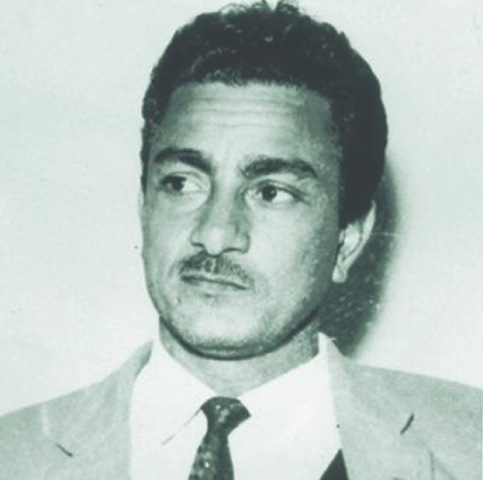
Director Hassan Tariq stepped in and decided to finish the project, as payback to the man who had made his entry into films possible, first as a director with the memorable Neend. The opening and closing scenes in Bahisht remind viewers of Neend, which Riaz Shahid had also written.
All the songs of Bahisht were recorded in Riaz Shahid’s lifetime and are still popular on radio and TV. Main jo shaair kabhi hota by Mehdi Hassan is considered a classic, while Madam Noor Jehan’s Sitaron meri raat ke saharon and Kal tak jo kehtay thay apna defined the pain endured by a young, married woman.
Some tunes composed by Rasheed Attre (who died in 1967) were also incorporated in Bahisht. Kyun poochhtay ho by Mehdi Hassan was earlier rendered by Saleem Raza in 1964 for the film Azad as Tum poochhtay ho. Songwriter Tanvir Naqvi, a regular member of the Riaz Shahid camp and who had penned some songs for Bahisht, also passed away exactly a month after Riaz Shahid.
Music director A. Hameed was brought in to complete the soundtrack, as he was accustomed to Riaz Shahid’s and Hassan Tariq’s style of work. He had earlier composed for Yeh Aman and Gharnata, after Rasheed Attre’s death, for Riaz Shahid.
One of Naseem Begum’s last duets, Naqaab tau uthaiyye, with Ahmed Rushdi, was recorded in 1971, before the her unexpected death at the young age of 35. The music industry may have lost many stalwarts involved with Bahisht, but it also gained a star by the name of A. Nayyar.
The man who ruled the film music scene for many years to come was also introduced by Riaz Shahid. Nadeem loved the melodious song Yunhi din kat jaaye in Bahisht so much that he signed the singer for his maiden production Mitti Ke Putlay.
Arthur Lutf Nayyar aka A. Nayyar, who sounded very much like Bollywood’s Kishore Kumar, excelled as a singer during his FC College days. Yodelling came to him naturally and he unexpectedly used it in sad songs as well. Not many people are aware that A. Nayyar’s first song for Radio Pakistan was taken off air due to a misunderstanding; the duty officer assumed that someone had played Kishore Kumar’s song by mistake.
There was no looking back for the young singer after the success of Yunhi din kat jaaye. A Nayyar later sang for Waheed Murad, Nadeem, Shahid and Ghulam Mohiuddin, and even lent his voice to Shaan, son of his mentor Riaz Shahid.
In fact, Shaan named his eldest daughter Bahisht, in memory of his father; he was just one-and-a-half years old when his father Riaz Shahid had passed away.
Bahisht was finally produced by Neelo, Shaan’s mother, and won four Nigar Awards the following year. It won the award for Best Film, Best Screenplay, Best Scriptwriter and Best Supporting Actress (Riaz Shahid was awarded posthumously for two awards).
The story of Bahisht is still relevant and what Riaz Shahid penned over 50 years ago, remains a favourite topic for both Pakistani and Indian television dramas, and Bollywood films today.
Shades of Sarkar Maa were recently witnessed in Jaya Bachchan’s portrayal of the autocratic grandmother Dhanalaxmi Randhawa in Karan Johar’s Rocky Aur Rani Ki Prem Kahani. And the way a woman of today (Alia Bhatt’s Rani) tackles difficult domestic situations is certainly not new for those who have seen Riaz Shahid’s Bahisht.
Published in Dawn, ICON, October 8st, 2023