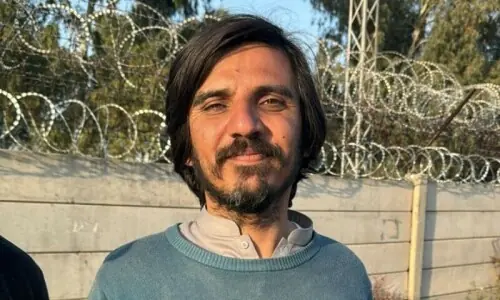
PAKISTAN may never have witnessed a character as notorious and slippery in the illegal organ trade as Fawad Mumtaz. A plastic surgeon-turned-alleged criminal mastermind, Mr Mumtaz has repeatedly escaped the clutches of the law, making a mockery of our law-enforcement and justice systems.
His recent escape from FIA’s custody and rearrest has once more put the spotlight on the dark web of organ trafficking in Pakistan. Mr Mumtaz’s operations have reportedly spanned Punjab, KP and AJK since 2009. He has, allegedly, even preyed on clients from the Gulf countries.
The billionaire surgeon reportedly thrived on exploiting desperate donors and critically ill patients alike, leveraging their despair for financial gain. The insidious episode involving the unfortunate demise of comedian Umer Sharif’s daughter, following an illegal transplant by Mr Mumtaz, underscores the dire stakes involved and the sheer impunity with which these criminal networks operate.
Not only is the physical well-being of individuals at risk, the ethical fibre of our medical community is also threatened.
It is imperative we dissect the depth and reach of Mr Mumtaz’s network, bringing every enabler, accomplice and beneficiary of this malicious trade to justice. The onus falls on our lawmakers, law enforcers, and the medical community, to irrevocably dismantle the dangerous empire he is associated with.
The state must also strengthen the implementation of the Transplantation of Human Organs and Tissues Act, 2010, that criminalises illegal transplantation so the organ trafficking trade finds little room to operate and no other Fawad Mumtaz emerges from the shadows.
Furthermore, we must spread awareness about organ donation. More than 150,000 people die of organ failure in Pakistan each year, according to SIUT, and the primary reason behind these deaths is the non-availability of organs.
In addition, it must be recognised that the issue goes beyond tackling a legal challenge. The sordid reality is that this illicit trade capitalises on the socioeconomic disparities that persist in Pakistan, forcing the impoverished into a situation that compromises on their health and dignity.
It is due to this that it is paramount we not only address poverty, but also provide support and rehabilitation to victims. The case of Fawad Mumtaz is not merely a test for our criminal justice system; it is a wake-up call, urging introspection, reform, and a united stand against the exploitative trade of organ trafficking.
Published in Dawn, October 4th, 2023