0
0

ISLAMABAD: The Food and Agriculture Organisation (FAO) of the United Nations (UN) has announced a new Country Programming Framework (CPF) covering 2023-2027, setting out three government priority areas, leverage innovative international good practices and global standards with national and international practices.
The programme, which aims to reduce poverty and hunger, draws on the previous programme and the recently developed United Nations Sustainable Development Cooperation Framework (UNSDCF).
The Common Country Analysis (UNCCA) examined the socio-economic, demographic, political, cultural, climatic and environmental situation. The major challenges highlighted by the UNCCA are zero hunger in relation to malnutrition, climate change and the environment, sustainable inclusive economic growth and decent work.
The total resource requirements for implementing the country programme for development-related projects would amount to $1 million, out of which 75pc of the projected amount has already been committed while the remaining will be mobilised.
In addition to the projects under the five-year country programme, the FAO will also implement emergency-related programming, and during 2023-27, the indicative prospect of an average of $7 to $10 million per annum has been projected.
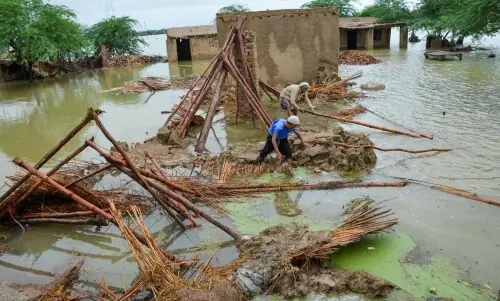
The emergency programming would concentrate on social protection and climate-related calamities besides animal diseases, antimicrobial resistance and plant pests and diseases.
The FAO says the country programme will be pursued in partnerships with joint efforts of the government and development partners for enhanced coordination. The government and FAO look forward to seeking collaboration and support from all concerned partners for the successful implementation of the CPF.
In implementing the CPF and as member of the UN Country Team, the FAO will engage the governance and management structures of the UNSDCF to support its effective implementation.
The FAO will promote coherence in its own CPF and ensure that the use of national systems and the promotion of national leadership are maximised through the leadership of the Ministry of National Food Security and Research, and in the case of the UNSDCF through the Joint UN-Government Steering Committee (JSC) mechanism supported by the UN Country Team and the UN Programme Management Team.
The UNSDCF will also have a national level oversight committee and provincial steering committees in which the FAO will engage and ensure that its own programme is contributing effectively.
The UNCCA found that significant challenges persist on most SDGs, including those of most relevance to FAO’s work namely ‘zero hunger’ (SDG 2), ‘gender equality” (SDG 5), ‘clean water and sanitation’ (SDG 6), ‘life below water” (SDG 14), and ‘life on land” (SDG 15). With regard to SDG 2, the UNCCA found that declining food production has contributed to high food prices, coupled with uneven levels of food access and consumption.
Published in Dawn, October 4th, 2023