Hundreds dead from dengue fever in war-torn Sudan: medics

Outbreaks of dengue fever and acute watery diarrhoea have “killed hundreds” in war-torn Sudan, medics reported on Monday, warning of “catastrophic spreads” that could overwhelm the country’s decimated health system.
In a statement, the Sudanese doctors’ union warned that the health situation in the southeastern state of Gedaref, on the border with Ethiopia, “is deteriorating at a horrific rate”, with thousands infected with dengue fever.
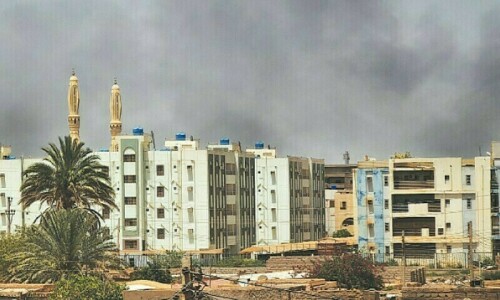
Though Gedaref has been spared the direct effects of the brutal war between the regular army and the paramilitary Rapid Support Forces, it has nonetheless been impacted by mass displacement and other humanitarian crises.
Over five months into the war, 80 per cent of the country’s hospitals are out of service, according to the United Nations.
Even before the war, Sudan’s fragile healthcare system struggled to contain the annual disease outbreaks that accompany the country’s rainy season starting in June, including malaria — endemic in Sudan — and dengue fever.
This year, with Gedaref hosting over 250,000 internally displaced persons according to the UN, the situation is much worse.
“The hospital’s beds are all full but the cases keep coming in, particularly children,” a medical source told AFP from Gedaref Hospital, requesting anonymity out of concern for his safety.
“But the number of those receiving treatment at home is much more than those at the hospital,” he continued.
Gedaref resident Amal Hussein told AFP that “in each home, there are at least three people sick with dengue”.
Dengue is a mosquito-borne disease that causes high fever, headaches, nausea, vomiting, muscle pain and, in the most serious cases, bleeding that can lead to death.
Medics and the UN have repeatedly warned that the violence in Sudan, combined with the rainy season and devastated infrastructure, would cause disease outbreaks across the country.
More than 1,200 children have died in refugee camps since May due in part to a measles outbreak, according to the UN refugee agency.
In El Fasher, the capital of North Darfur state, “13 cases of malaria were reported in one week”, according to the health ministry.
In the capital Khartoum, “three people died of acute watery diarrhoea” —suspected cases of cholera — in the Hajj Youssef district in the city’s east, the local resistance committee said Monday.
“Take precautions to avoid infection,” urged the committee — one of many that used to organise pro-democracy demonstrations before the war and now volunteers to help those caught in the crossfire.
By early September, the conflict between army chief Abdel Fattah al-Burhan and his former deputy, RSF commander Mohamed Hamdan Daglo, had killed nearly 7,500 people, according to a conservative estimate from the Armed Conflict Location & Event Data Project.
Dozens of hospitals have been bombed or occupied by fighters, in what the UN has called “cruel disregard for civilians”.
The medics and aid workers that remain are themselves regularly targeted and their stocks looted, as more people demand help.
Even before the war, one in three Sudanese needed to walk more than an hour to get medical care, where less than 30 percent of vital medicines were available, according to the UN.