IT is Pakistan’s moment of reckoning. Words of warning are pouring in to remind the leadership and the people that the country continues to face existential challenges.
The other day, the IMF chief urged the caretaker prime minister and Pakistanis to collect taxes from the wealthy and subsidise the poor, who are being crushed under the soaring cost of living.
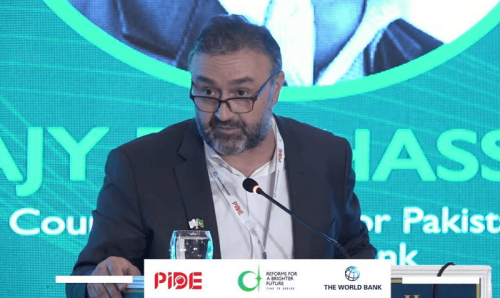
On Friday, Najy Benhassine, World Bank country manager for Pakistan, underscored that the state was at a crucial juncture where it must decide whether it wants to continue with 40pc of its population living below the poverty line, with policy decisions being driven by a military, political and business elite that has vested interests, or to change direction towards a better future.
“This may be Pakistan’s moment in making policy shifts,” he argued, while releasing a set of policy notes — Reforms For a Brighter Future: Time to Decide — to be discussed and finalised before a new government takes over after elections, due to be held in the last week of January next year.
He pointed out that states with steady and higher economic growth, such as India, Indonesia and Vietnam, were able to fend off similar difficulties as they tackled their respective crises through making the right decisions.
The economic quandary that a country of 240m people finds itself facing today is of its own making. Stuck in the midst of grave human resource and financial troubles, Pakistan is contending with complex challenges that need to be addressed and tackled simultaneously if it is to extricate itself from the current crisis and move forward.
One cannot expect to collect more taxes and to grow economically without improving sound public services such as education, healthcare and drinking water.
Likewise, balance-of-payments issues cannot be resolved without boosting productivity, and investing in an educated and healthy labour force as well as in climate-resilient infrastructure. Everyone and every sector has to rise together, in sync, if this country is to put itself on a progressive trajectory.
This is not the first time that global lenders such as the IMF and World Bank, which we always lean on for help during what seem to be perpetually hard times, have advised us on what we should do. And it is not as if our ruling classes and policymakers are unaware of the problems or their solutions.
Yet these constant reminders underline how the vested interests that the World Bank country chief alluded to are impeding much-needed reforms to restructure the economy.
If we are to revive the economy, every stakeholder that Mr Benhassine has mentioned should ask themselves whether they want short-term gains at the expense of the country and its people, or longer-term stability that can allow us to function and have a future to look forward to.
Published in Dawn, September 25th, 2023