Aid arrives in flood-hit Libya, but hopes fade for survivors


DERNA: Shipments of international aid arrived in Libya, mainly from the United Arab Emirates and Iran, on Saturday, offering a lifeline to thousands despite dwindling hopes of finding more survivors days after deadly flash floods.
The World Health Organisation (WHO) announced 29 tonnes of aid had arrived in the eastern city of Benghazi. An AFP correspondent saw two aid-laden planes, one from the UAE and another from Iran, land in Benghazi, more than 300km west of Derna.
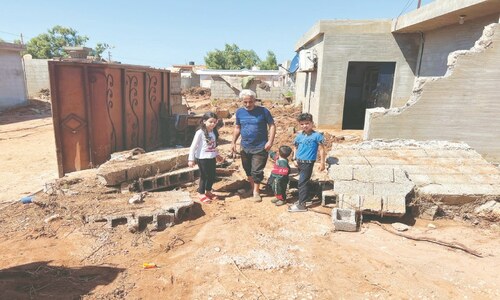
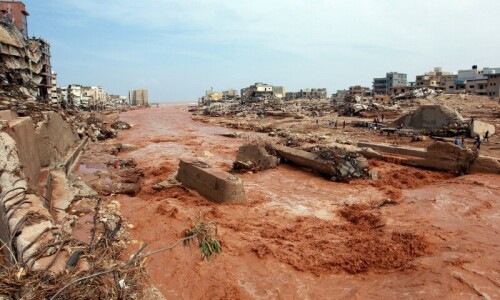
On September 10, floods submerged the port city of Derna, washing thousands of people and homes out to sea after two upstream dams burst under the pressure of torrential rains triggered by a hurricane-strength storm.
The North African country is currently ruled by two rival administrations that have battled for power since a Nato-backed uprising toppled and killed Moamer Kadhafi in 2011.
Official vows to deal firmly with those responsible for poor condition of Abu Mansur and Al Bilad dams
On Saturday, Oussama Hamad, the head of the eastern-based government, announced new measures would be imposed from Saturday closing the disaster zone off from civilians.
On the other hand, conflicting death tolls have been reported, with the health minister of the eastern-based administration, Othman Abdeljalil, putting the number of lives lost at 3,166.
The WHO claimed that the “bodies of 3,958 people have been recovered and identified”, with 9,000 more still missing.
“This is a disaster of epic proportions,” said WHO’s Libya representative Ahmed Zouiten. “We are saddened by the unspeakable loss of thousands of souls.”
Dams cracked since 1998
After opening a probe into the circumstances leading to the collapse of Abu Mansur and Al Bilad dams, Libya’s prosecutor general Al-Seddik al-Sur said both dams had been cracked since 1998 though repairs begun by a Turkish company in 2010 were suspended after a few months when the Nato-backed uprising in 2011 flared, and the work never resumed.
The prosecutor vowed to deal firmly with those responsible for poor condition of the two dams, which had been built “to protect Derna from floods”.
Published in Dawn, September 17th, 2023