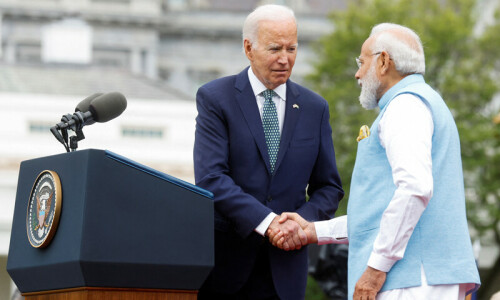
Journalists kept away from Modi-Biden meeting


NEW DELHI: US President Joe Biden was welcomed warmly by Indian Prime Minister Narendra Modi on Friday ahead of the G20 summit in New Delhi, but journalists were blocked from covering the key meeting.
Media access to such bilateral encounters on the sidelines of major summits like the G20 is always tightly controlled, but it is rarely blocked entirely.
The incident comes after protracted negotiations were needed before Indian officials agreed to Modi taking one question from US reporters at a press briefing when he made a state visit to Washington in June — the Indian leader rarely if ever takes questions from foreign media.
The White House “pool” of journalists accompanying Biden usually attends the start of face-to-face meetings such as Friday’s, hearing preliminary statements, taking a few photographs — and asking some questions.
“The President believes a free press is the pillar of our democracy,” White House spokeswoman Karine Jean-Pierre told journalists on board the aeroplane taking Biden to India. After landing, Biden headed to the Indian leader’s residence, but journalists travelling with him were told to remain outside.
“We in the US government work hard to ensure and obtain access for US journalists to everything the President does,” National Security Advisor Jake Sullivan had said on board Air Force One.
“What we can pledge to you is what’s in our control — which is ensuring that we are transparent and comprehensive in our readout of what the two leaders discussed.” At the Washington press conference with Biden in June, the one question to Modi came from Wall Street Journal reporter Sabrina Siddiqui, who asked him about repression of Muslims in India and the country’s record on human rights.
Published in Dawn, September 9th, 2023