0
0

KARACHI: The caretaker government of Sindh on Saturday claimed that it would ensure that accused persons in the Ranipur housemaid murder case could not force the victim’s family to enter into any compromise.
Ten-year-old Fatima, a domestic help, was tortured to death at the haveli of Pir Asad Shah, who was arrested in the case.
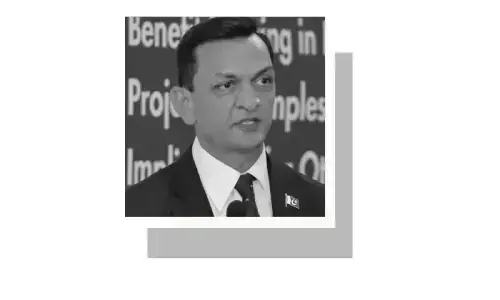
Accompanied by Health Minister Dr Saad Khalid and Law Minister Umer Soomro, caretaker Home Minister retired Brig Haris Nawaz told a press conference that the Ranipur incident was very serious and he was himself monitoring the course of investigation.
He said the caretaker law minister himself had gone to Fatima’s house.
Law minister accuses doctors, paramedics of cover-up; says victim’s family offered protection
A fresh DNA test of suspect Asad Shah was also conducted in Karachi on the instruction of the provincial health minister, he said, adding that there should not be any doubt about the results of the investigation.
The health minister said that the entire nation was ashamed of such an incident.
He said the protection of the victim’s family was an important responsibility and the provincial government had offered the family their shifting to Karachi, but they wanted to stay in their hometown.
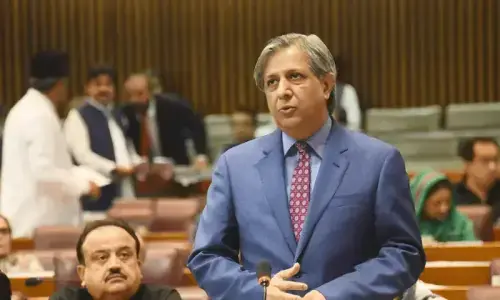
The law minister said that the negligence of a private doctor was observed in the Ranipur case. “An investigation in this regard is in progress,” he added.
He said that seven children had so far been recovered during the investigation of the Ranipur case and they would be taken into protective custody.
The law minister said that the investigators had reason to believe that suspect Hina Shah was involved in the incident, adding that facts would surface following her arrest in the case.
Mr Soomro said that the statements of the doctors and paramedics, who attended victim Fatima, were contradictory.
“Doctors tried to cover up the incident as they treated the victim girl for gastroenteritis, although she had injuries from head to toe,” he added.
Replying to a question, the health minister said that malaria was one of the major issues across the province, adding that the provincial government had evolved a strategy to cope up with it. “One doctor each has been deputed in every government hospitals to deal with malaria patients,” he added.
Published in Dawn, September 3rd, 2023