Super Typhoon Saola sweeps towards southern China megacities



Super Typhoon Saola threatened southern China on Friday with some of the strongest winds the region has endured, forcing the megacities of Hong Kong and Shenzhen to effectively shut down.
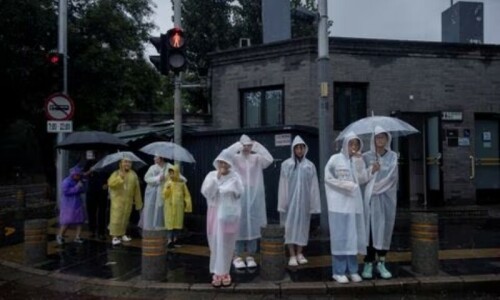
Tens of millions of people sheltered indoors as hundreds of flights were cancelled, the stock market suspended trading and the start of Hong Kong’s school year was delayed.
With a direct hit on Hong Kong possible, authorities warned they may raise the warning level from T8 to T9 or T10 — the city’s highest alert, which has only been issued 16 times since World War II.
By 2pm (0600 GMT), Saola was 140 kilometres east-southeast of Hong Kong, packing sustained winds of 210 km per hour.
Mainland Chinese authorities have already issued the highest typhoon warning for the storm, with the national weather office saying Saola could be among the top five strongest typhoons to hit southern Guangdong province — home to Shenzhen — since 1949.
“The city will open all shelters for the public to take refuge,” said the emergency response department of Shenzhen, home to 17.7 million people.
All public transportation in Shenzhen will be halted by the evening, while trains in and out of Guangdong will be suspended from 8pm to 6pm Saturday.
“Of course, it’s going to affect our life,” said Wu Wenlai, 43, who runs a restaurant in a Shenzhen suburb. “We have to close the restaurant and send all the workers home for two days.”
“My eldest son was planning to fly to Chengdu today for university and his flight has been cancelled now,” Wu added.
But he was unfussed by the government warnings: “We are quite used to it. We usually have several typhoons every year.”
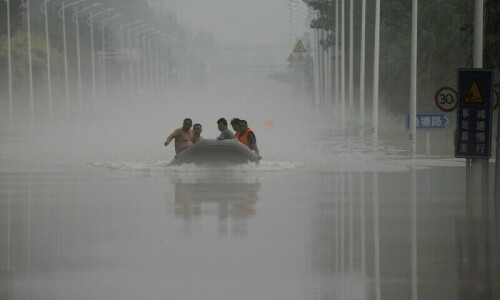
Across the mainland border in Hong Kong, authorities warned Saola could skirt within 50km of the territory, causing a storm surge that could lead to “serious flooding”.
“The maximum sea level may be similar to that when Mangkhut hit Hong Kong in 2018,” the city’s weather observatory said.
Typhoon Mangkhut in 2018 — the last time Hong Kong issued a T10 warning — left more than 300 people injured in Hong Kong, shredding trees and unleashing floods.
In mainland China, it affected more than three million people in the southern provinces, killing six.
More intense typhoons
Southern China is frequently hit in summer and autumn by typhoons that form in the warm oceans east of the Philippines and then travel west.
Climate change has increased the intensity of tropical storms, with more rain and stronger gusts leading to flash floods and coastal damage, experts say.
Hong Kong’s streets were deserted on Friday, though last-minute shoppers filled markets trying to stock up for the weekend.
A shopper surnamed Lee, accompanied by her young daughter, said the government made the right choice to delay the start of the school year.
“If this reaches (T10), then there might be traffic disruption. Better to wait until that is over before sending kids to school,” Lee said, adding that she bought enough groceries to sustain the family for the weekend.
Businesses around Hong Kong duct-taped glass displays and windows, while sandbags were stacked by the waterfront in Kowloon to prevent flooding.
Surfers took advantage of the high winds and caught the huge waves generated by the coming typhoon at a Hong Kong beach.
Hong Kong’s airport authority said more than 300 flights were cancelled on Friday, though 600 were still scheduled.
Saola displaced thousands earlier this week as it passed the northern Philippines, but no direct casualties have been reported so far.