0
0

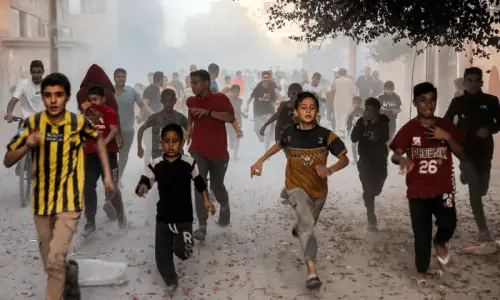
ISLAMABAD: The United Nations and its partners are aiming to reach 250 million people worldwide affected by conflict and other crises amid a shortfall in humanitarian funding.
The UN pledge marked the ‘World Humanitarian Day’, commemorated annually on August 19 to mark the day in 2003 when a suicide bomber detonated a truck full of explosives outside the UN headquarters at the Canal Hotel in Baghdad. Among the staff who lost their lives was UN High Commissioner for Human Rights, Sergio Vieira de Mello, who also headed the UN mission in Iraq.
“As crises multiply, it is unacceptable that humanitarians are being forced to reduce aid to millions of people in need,” UN Secretary-General Antonio Guterres said on World Humanitarian Day.
The risks that humanitarians face have also multiplied, he added, citing rising geopolitical tensions, blatant disregard for international humanitarian and human rights law, deliberate assault and disinformation campaigns.
Last year, 444 aid workers fell victim to violence in 235 separate attacks. Of that number, 116 were killed, 143 injured and 185 kidnapped. Most were national staff working with non-governmental organizations.
The International Rescue Committee commemorated the ocassion as the IRC reaches its ninetieth anniversary. Throughout its 90-year journey globally and 40 years in Pakistan, the IRC has pioneered innovative approaches to address complex challenges.
IRC says from delivering essential medical services, safe water, education, and protection to people who are displaced, their impact spans over 40 countries and reaches some of the world’s most inaccessible areas, often at great risk to their safety.
In its ‘early needs identification report of monsoon flood affected areas in Pakistan, IRC says it has adopted a multi-sectoral assessment approach to identify the sector-wise needs of the target population in eight districts of Pakistan – Upper Chitral, Lower Chitral, Dadu, Qambar Shahdad Kot, Rajanpur, Naseedabad, Jafferabad and Kharan.
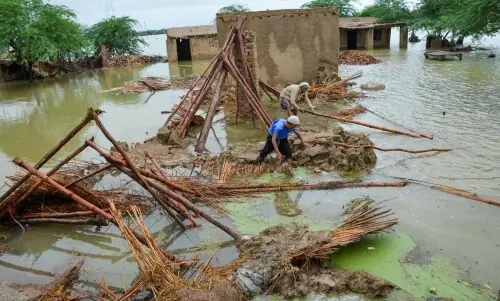
IRC report says livestock has been negatively impacted due to monsoon rains, especially in Balochistan and Sindh, where many livestock could not be saved. As for infrastructure, 2652 houses are fully damaged across the targeted districts while 3284 houses are reportedly partially damaged, with Sindh and Balochistan suffering most infrastructural damages.
Published in Dawn, August 20th, 2023