Data points


The croissant theory
Bakeries are learning that the most delicious pastry is the one their customers can’t have. Creating scarcity via limited-time deals or hard-to-find items is a tried-and-true strategy for consumer-facing businesses. It also comes with the risk of turning off customers. Smaller independent bakeries are becoming particularly successful at it now with limited runs of croissants or other baked goods that then are quickly advertised on social media. Keith Wilcox, a professor of marketing at Texas A&M University in College Station, says the scarcity strategy has helped bakeries increase the perception of quality and connect directly with customers. Bakeries have the added pressure to sell croissants and other products that otherwise would lose their value in mere hours. Call it the croissant theory. To get more customers in the door, bakeries have attempted to build a culture around people trekking to their store for high-quality, day-of baked goods, waiting in line, posting a photo online and returning the next time to try a pastry that was sold out.
(Adapted from “The Croissant Theory, or Why These Businesses Are Taunting Their Customers,” by Alina Dizik, published on August 7, 2023, by The Wall Street Journal)
Loving chatbots
AI chatbots aren’t just for planning vacations or writing cover letters. Some people are developing connections with artificial intelligence that are becoming personal. The recent AI boom has paved the way for more people and companies to experiment with sophisticated chatbots that can closely mimic conversations with humans. Apps such as Replika, Character.AI and Snapchat’s My AI let people message with bots. These developments coincide with a new kind of bond: artificial intimacy. Messages from the bots can sometimes be stilted, but the improvements in generative AI have made it harder for many people to distinguish between what came from AI and what came from a human. Responses from the bots can express empathy or even love. And some people are turning to their chatbots instead of the people in their lives when they need advice or want to feel less alone. Bot relationships largely are still rare. But as AI’s abilities improve, they will likely blossom.
(Adapted from “The Other AI: Artificial Intimacy With Your Chatbot Friend,” by Cordilia James, published on August 6, 2023, by The Wall Street Journal)
Proxy hostilities in Niger
Most Americans probably don’t care about the coup in Niger, but Vladimir Putin cares about it a great deal — and for good reason. The US is losing one of its few friends in Africa. As Putin and Xi see it, we’re already in the next world war, even if nobody’s declared it yet or started shooting directly at the other side. You can think of the unfolding disaster in Niger in four ways, from embarrassing to ominous, catastrophic and apocalyptic. A general heard that he might be fired and decided instead to oust the leader, which led to the coup. The US, Europe and the wider West must support Africa — and indeed the whole Global South — not just now but from now on. By supporting the coup in Niger, Russia proves again that it sees its struggle against the West as a global war, just not a declared one yet.
(Adapted from “Out of Africa, a New World War?” by Andreas Kluth, published on August 8, 2023, by Bloomberg)
China’s economic woes
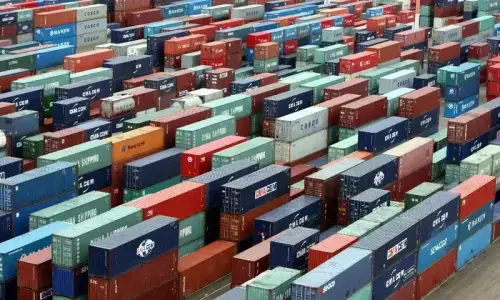
For the past two years, policymakers in most of the world’s biggest economies have faced an excruciating stagflationary dilemma. They have wrestled simultaneously with high inflation, which demands steep interest rates, and fears of a recession, which would normally call for policy easing. The exception is China. It is now struggling with both slowing growth and dangerously low inflation: stagnation, not stagflation. New figures show that consumer prices fell by 0.3pc in July, compared with a year earlier. Officials were quick to blame volatile food prices. But the deflationary pressure is more widespread. And the economy’s “nominal” growth rate (which does not strip out the effects of inflation) has dropped below its real, inflation-adjusted rate. This implies that many prices across the economy are falling. This combination of slow growth and deflationary peril is troubling.
(Adapted from “Can China escape deflation?” published on Aug 9th 2023 by The Economist)
Published in Dawn, The Business and Finance Weekly, August 14th, 2023