Saudi Arabia names non-resident ambassador for Palestinian Territories


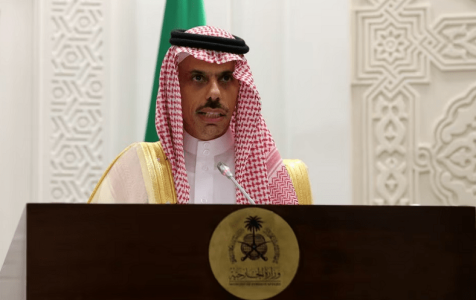
Saudi Arabia on Saturday named a non-resident ambassador for the Palestinian Territories who will also serve as consul general in Jerusalem, a new position announced amid speculation about possible future ties with Israel.
The role will be filled by Nayef al-Sudairi, the current ambassador to Jordan, according to a social media post from the embassy in Amman confirmed by a Saudi foreign ministry official.
The appointment represents “an important step” underscoring the desire of King Salman and Crown Prince Mohammed bin Salman “to strengthen relations with the brothers of the State of Palestine and give it a formal boost in all areas”, Sudairi said in a video broadcast by the Saudi state-affiliated Al-Ekhbariya channel.
The file for the Palestinian Territories has traditionally been handled by Saudi Arabia’s embassy in Amman.
Saudi Arabia does not recognise Israel and did not join the 2020 US-brokered Abraham Accords that saw Israel establish ties with two of the kingdom’s neighbours, the United Arab Emirates and Bahrain.
But during US President Joe Biden’s tour of the Middle East last year, the Saudi civil aviation authority announced that it was lifting overflight restrictions on “all carriers”, paving the way for Israeli planes to use Saudi airspace.
Biden himself flew directly to Jeddah from Israel’s Ben Gurion airport for his talks with Saudi leaders.
The kingdom denied at the time that the airspace move was “a precursor to any further steps” towards normalisation.
Riyadh has repeatedly said it would stick to the decades-old Arab League position of not establishing official ties with Israel until the conflict with the Palestinians is resolved.
Normalisation push
Yet in recent months Riyadh and Washington have held talks on Saudi conditions for progress on normalisation, including security guarantees and assistance with a civilian nuclear programme with uranium enrichment capacity, according to people briefed on the meetings.
Hesham Alghannam, a Saudi analyst at the Naif Arab University for Security Sciences in Riyadh, told AFP this week that Saudi Arabia needs to know whether the Israelis are “actively working towards making tangible progress on resolving the Palestinian-Israeli conflict”.
After a meeting on Saturday at the Palestinian embassy in Amman where Sudairi presented a copy of his credentials, Majdi al-Khaldi, Palestinian presidential adviser for diplomatic affairs, said he “welcomed” the appointment, official Palestinian news agency Wafa reported.
It “will contribute to strengthening the strong and solid brotherly relations that bind the two countries and the two brotherly peoples,” Khaldi said.
A Palestinian Authority official said that with this announcement “Saudi Arabia has reaffirmed its recognition of the state of Palestine with Jerusalem as its capital”.
“This is one part of several steps and we will continue to develop the relationship with them,” he told AFP on condition of anonymity as he was not authorised to speak to the media.
A spokesman for the Israeli foreign ministry offered no immediate comment, referring AFP to recent comments by Foreign Minister Eli Cohen that “peace between Israel and Saudi Arabia is a matter of time”.
Saturday’s move “gives insight into how diplomatic relations might be between Saudi Arabia and Israel: a Saudi ambassador to Palestine with a file for Israel,” said Aziz Alghashian, a Saudi analyst and expert on Saudi-Israeli relations.
“The immediate signal is to treat Saudi demands for Israeli concessions seriously.” Sudairi’s appointment also sends a “public message of support to the PA (Palestinian Authority),” said Ghaith al-Omari, a senior fellow at The Washington Institute for Near East Policy.
“Given the PA’s dire financial situation, Saudi assistance could make a huge difference” apart from offering “badly needed diplomatic support to the PA”, he said.