0
0

ISLAMABAD: The federal cabinet has rejected a draft policy to regulate the production and trade of hemp as two ministries compete to spearhead the efforts to legalise the cannabis derivative.
The policy, presented by the Ministry of Narcotics Control, proposed the establishment of a new body to oversee the cultivation, harvest, processing and sale of medicinal hemp.
The policy was opposed by the Ministry of Science and Technology on the grounds that medicinal hemp was neither a kind of drug nor a toxic substance, thus it falls outside the purview of the narcotics control ministry.
The move was an apparent retaliation to the objections raised by the narcotics control ministry when the science and technology ministry presented its initial draft of the policy.
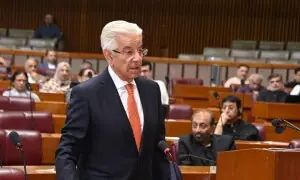
In response to the developments, the federal cabinet decided to establish a committee, led by Defence Minister Khawaja Asif to determine the fate of the proposed authority.
The summary to the cabinet highlighted that in May, the Prime Minister’s Office directed that a policy should be formulated by the Ministry of Narcotics Control in consultation with the Ministry of Science and Technology.
According to the proposed policy, the narcotics control ministry will be responsible for issuing licences and NOCs for the production of industrial hemp and medicinal cannabis as well as their commercial trade.
The ministry will also monitor proposed sites for the cultivation and extraction of industrial hemp and medicinal Cannabis.
The science and technology minister would facilitate research and testing procedures.
The Pakistan Council of Scientific and Industrial Research will establish testing facilities for industrial hemp and medicinal cannabis and facilitate their cultivation, extraction, refining and product development through research and development.
The summary stated that cannabis sativa was one of the species with the most diverse uses. It can be grown in most climates, is drought resistant and requires less fertilisers, pesticides or herbicides for growth.
Cannabis has also shown therapeutic potential for the treatment of pain and other medical conditions such as epilepsy and spasticity associated with multiple sclerosis.
Currently, China is the leading producer of hemp, the summary stated.
The idea to legalise the production of medicinal hemp was first proposed by Fawad Chaudhry, the then science and technology minister, in September 2020. The cabinet, led by former prime minister Imran Khan, granted principal approval to the project. After the change in the government in April 2022, Nawabzada Shahzain Bugti, the minister for narcotics control, approached Prime Minister Shehbaz Sharif, advocating that hemp falls under the domain of marijuana and, therefore, should be regulated by his ministry.
Published in Dawn, July 28th, 2023