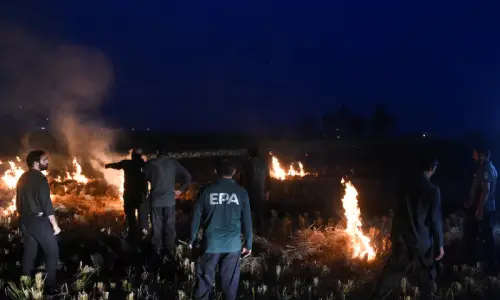
NAROWAL: The irresponsible disposal of medical waste from both government and private hospitals in Narowal has raised concerns among the local population. Private hospitals have been found dumping prohibited medical waste on garbage heaps, and both the Punjab Healthcare Commission and the District Health Authority have been neglecting their responsibility in this matter.
According to reports from Dawn, the inappropriate burning of medical waste has resulted in the mixing of chemicals with water, leading to the spread of diseases among citizens. The area comprises one district headquarters hospital, two tehsil headquarters hospitals, seven rural health centers, and 56 basic health units, all falling under the jurisdiction of the Punjab Health Department in Narowal district.
As part of the Infection Control Programme, the Primary and Secondary Health Department of Punjab has partnered with private contractors to collect and incinerate infectious medical waste from district and tehsil headquarters hospitals across Punjab. The Punjab Government has installed incinerators at the district level to burn infectious medical waste.
In Narowal, incinerators have been set up at the Primary Health Centre in Pejuwali on New Lahore Road. However, the Pejuwali point lacks a proper arrangement for the disposal of water mixed with chemicals during the medical waste burning process. Consequently, infectious water containing chemicals spreads on the premises of the health center, given the absence of a drainage system.
During a visit to the Pejuwali center, it was observed that the lawns were being maintained with toxic water throughout the year, leading to a foul smell permeating the government hospital’s premises. Despite providing health facilities to hundreds of patients across 16 villages, patients and their attendants have raised complaints about feeling uneasy due to the strong smell of water mixed with chemicals present on the hospital premises.
Furthermore, medical waste from seven rural health centres and 56 basic health units in the district is not being properly managed and disposed of in the designated incinerators. There are 57 private hospitals and over 150 clinics in Narowal district that resort to dumping their medical waste in garbage dumps, rather than following proper protocols for disposal.
Reports said that some employees of both government and private hospitals are involved in the illicit sale of used medical materials, including syringes, drip sets, plastic bottles, and other items, to junk shops.
The situation worsens as there is only one incinerator in the private sector available for burning infectious waste from private hospitals in Narowal district. Even more concerning, these existing incinerators have been in a poor condition for the past two years.
Dawn learned the Punjab Healthcare Commission, responsible for monitoring and registering government and private hospitals, appears to be neglecting its responsibility in overseeing proper medical waste disposal.
Local citizens Farhan Ali and Karamat Ali Shah said the noxious smell of chemicals spreading in and around the Pejuwali centre was unbearable.
Muhammad Ashraf, assistant director of environment, said that strict legal actions are being taken against junk shops that keep and buy prohibited medical waste. He reported that 11 first information reports (FIRs) were registered last year in such complaints, and another seven FIRs were registered this year. Efforts were made to reach Dr Naveed Haider, Narowal health chief executive officer, but to no avail.
Deputy Commissioner Muhammad Ashraf told Dawn that the district administration is planning to relocate the incinerators from the Pejuwali unit to an area outside the populated regions. The process for the purchase of suitable land has already been initiated, and the work on the project is expected to be completed within the next three to four months.
Locals demand immediate attention from the prime minister, the caretaker chief minister, and the health secretary to address the issue.
Published in Dawn, July 25th, 2023