US probe finds racism rife among police where Floyd was killed


MINNEAPOLIS: Police in Minneapolis, Minnesota, routinely resort to violent and racist practices, the US Justice Department said on Friday in findings of a review three years after George Floyd was murdered by city police officers.
The Minneapolis police department (MPD) “uses excessive force, including unjustified deadly force” and “unlawfully discriminates against Black and Native American people when enforcing the law”, the department concluded.
The report detailed multiple cases of Minneapolis police shooting unarmed and unthreatening people, both before and after Floyd’s May 25, 2020, death.
The cases included killing a woman who had called the 911 emergency number to report a possible sexual assault, and a man already in custody who was stabbing himself.
The report also cited frequent cases of police using excessive force, often with fatal consequences.
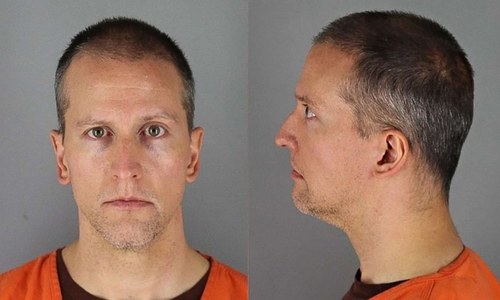
Floyd was killed after police officer Derek Chauvin held his knee to the Black man’s neck for nearly 10 minutes while three other officers looked on.
He had been detained on a minor charge, for allegedly using a counterfeit $20 note.
His death set off nationwide protests over police abuse and discrimination against African Americans, raising the pressure on police departments around the country.
Based on the report, US Attorney General Merrick Garland announced that Minneapolis had agreed in principle to accept a programme of tough oversight from the Justice Department that will force reforms.
Garland said the study showed a pattern of Minneapolis police violating multiple constitutional rights of people in the community, and that Floyd’s death brought this to broader attention.
Floyd’s death “has had an irrevocable impact on the Minneapolis community and our country and around the world”, Garland said in a press conference.
“This loss is still felt deeply by those who loved and knew him and by many who did not,” he said.
Floyd’s case became notorious after a bystander filmed his detention and death, with Floyd audibly telling Chauvin “I can’t breathe” before he lost consciousness.
Garland said that the investigation found “numerous incidents” in which Minneapolis police officers responded to detained people saying they could not breathe with comments like: “You can breathe, you’re talking now.” He also said that Minneapolis police regularly declined to intervene when colleagues were using excessive force, despite being required to do so.
“Years before he killed George Floyd, Derek Chauvin used excessive force on other occasions in which multiple MPD officers stood by and did not stop him.”
He said data showed police in the city routinely stopped, searched and used force against minorities at a far higher rate than against white people.
Minneapolis police “stopped Black and Native American people nearly six times more often than white people in situations that did not result in arrest or citation, given their shares of the population”, he said.
“Such conduct is deeply disturbing, and it erodes the community’s trust in law enforcement,” he said.
Garland said the study further found that Minneapolis police regularly violated the rights of peaceful protesters and journalists covering protests, especially those that followed Floyd’s death.
Published in Dawn, June 17th, 2023