0
0

ISLAMABAD: The government is “definitely, constantly and continuously” engaged with the International Monetary Fund on the latest budget, the junior finance minister said on Tuesday, stressing that there was no reason for disappointment that the ninth review of an ongoing bailout package shouldn’t be completed.
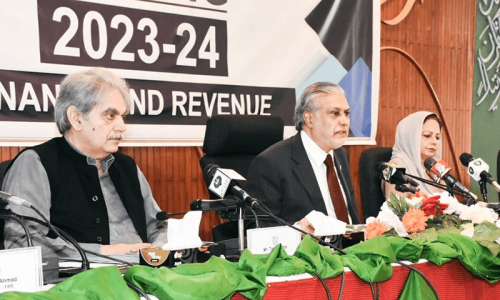
“We are constantly in touch with the IMF,” Minister of State for Finance and Revenue Dr Aisha Ghaus Pasha told journalists after a Senate committee meeting.
She said the global lending agency had already held meetings with the Federal Board of Revenue and the State Bank of Pakistan. Besides, the Fund was also in constant touch with the Ministry of Finance on budget details, seeking data, asking questions and trying to have clarity on everything.
Dr Pasha said the two sides — the IMF and the ministry — also had sessions over the past two days. “So, we are definitely and continuously engaged,” she said, adding that as long as the engagements were continuing, why one should say the matter had ended.
Asked if negotiations with bilateral partners had begun on debt restructuring, she said Finance Minister Ishaq Dar had said with clarity that Pakistan could consider that option, but it was not thinking of going to the Paris Club.
She said the country was not going to default on multilateral, commercial or other international debt, though it could, like other countries, consider getting its bilateral debt restructured.
Meanwhile, the meeting of the Senate Standing Committee on Finance presided over by Senator Saleem Mandviwalla reviewed the sales tax-related provisions of the Finance Bill 2024.
Notably, all sections falling under the ambit of 99D were deferred to allow for additional clarification during a subsequent meeting. The clause empowers the government to charge additional tax on certain “windfall” income, profits and gains for any of the preceding five tax years from the tax year 2023 and onwards.
The committee accepted the inclusion of Section 113, which pertains to minimum tax on the income of certain individuals. Additionally, Section 146-D, concerning the recovery of outstanding liabilities under other laws, and Section 152, which allows for applications of exemption certificates related to payments to non-residents, were also accepted.
Recognising the importance of regulating foreign exchange outflow, the committee deemed this proposal necessary to discourage non-essential purchases online and maintain a stable financial environment. By increasing the withholding tax rate, the committee aimed to protect the country’s economy while ensuring a balance in foreign exchange transactions.
Published in Dawn, June 14th, 2023