LONDON: The sports ministers of Europe’s top football nations on Wednesday urged global governing body FIFA and broadcasters to work together and “find a common path” over broadcasting rights for this year’s Women’s World Cup.
The rights are being sold separately from the men’s World Cup for the first time and FIFA President Gianni Infantino said earlier this month that Britain, Spain, France, Germany and Italy would face a blackout unless “unacceptable” bids were improved.
In a joint statement on Wednesday, the sports ministers of those five countries said they were aware of the constraints on broadcasters, but stressed the importance of “improving the global visibility of women’s sports” in their countries.
“Media exposure to women’s sports has indeed a highly significant impact on the development of women’s and young girls’ sports practices,” the statement said.
“Because of the high potential of the FIFA Women’s World Cup and the sport and social issues at stake, we consider it our responsibility to fully mobilise all stakeholders, for them to quickly reach an agreement.
“These are decisions for FIFA and broadcasters to take independently, but we know that discussions are in progress and we are confident in FIFA and independent broadcasters’ capability to find a common path toward fair development of the FIFA Women’s World Cup.”
Some 1.12 billion viewers tuned into the 2019 World Cup in France across all platforms, according to a FIFA audit of the tournament.
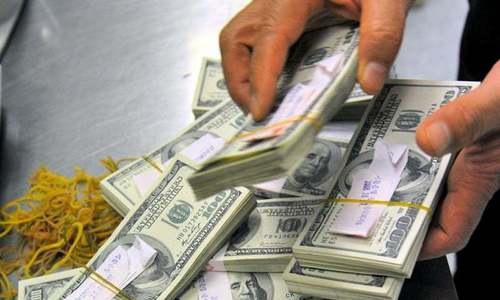
Infantino said broadcasters had offered only $1 million-$10 million for the rights for this year’s tournament in Australia and New Zealand, compared to $100 million-$200 million for the men’s World Cup.
FIFA secretary general Fatma Samoura has said she is confident the prospect of a Women’s World Cup TV blackout in Europe will bring broadcasters to the table with improved offers.
The ninth Women’s World Cup kicks off in Sydney and Auckland on July 20.
Published in Dawn, June 1st, 2023