Sudan ceasefire deal raises hopes for relief in Khartoum



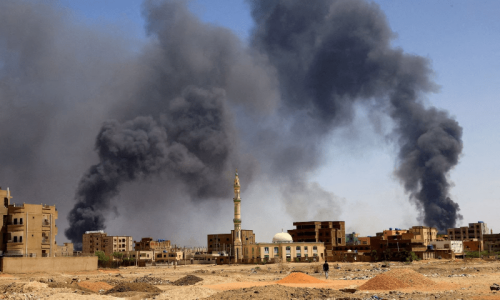
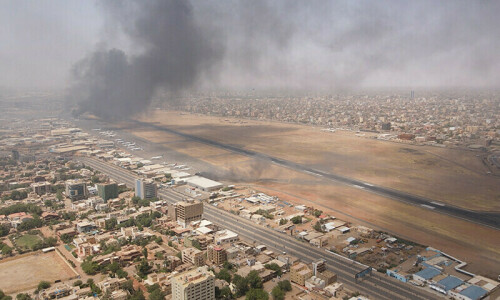
Sporadic fighting between Sudan’s warring factions could be heard in the capital Khartoum on Sunday, residents said, after a Saudi and US-brokered deal for a week-long ceasefire raised hopes of some let-up in the five-week conflict.
The ceasefire deal, signed by the army and the rival paramilitary Rapid Support Forces (RSF) after talks in the Saudi city of Jeddah, is due to come into effect on Monday evening with an internationally supported monitoring mechanism. It also allows for the delivery of humanitarian aid.
Repeated ceasefire announcements since the conflict started on April 15 have failed to stop the fighting, but the Jeddah deal marks the first time the sides have signed a truce agreement after negotiations.
Analysts say it is unclear whether army chief Abdel Fattah al-Burhan or RSF commander Mohamed Hamdan Dagalo, known as Hemedti, are able to enforce a ceasefire on the ground. Both have previously indicated they are seeking victory in the war, and neither of them travelled to Jeddah.
The war has seen 1.1 million people flee their homes, moving either within Sudan or to neighbouring countries, fuelling a humanitarian crisis that threatens to destabilise the region.
It has left those still in Khartoum struggling to survive amid mass looting, a collapse in health services, and dwindling supplies of food, fuel, power and water. Witnesses reported the sound of clashes in central and southern Khartoum on Sunday.
Safaa Ibrahim, a 35-year-old Khartoum resident, told Reuters by phone that she hoped the deal could bring an end to the conflict.
“We’re tired of this war. We’ve been chased away from our homes, and the family has scattered between towns in Sudan and Egypt,” she said.
“We want to return to normal life and safety. Al-Burhan and Hemedti have to respect people’s desire for life.”
Waiting for the truce

The war erupted in Khartoum over plans for the generals who seized full power in a 2021 coup to sign up for a transition towards elections under a civilian government.
Burhan and Hemedti had held the top positions on Sudan’s ruling council since former leader Omar al-Bashir was overthrown during a 2019 popular uprising.
The Jeddah talks have been focused on allowing aid and restoring essential services. Mediators say further talks would be needed to seek the removal of forces from urban areas to broker a permanent peace deal with civilian involvement.
“The people of Khartoum are waiting for the truce and the opening of humanitarian corridors,” said Mohamed Hamed, an activist in the capital. “The health situation is getting worse day after day.”
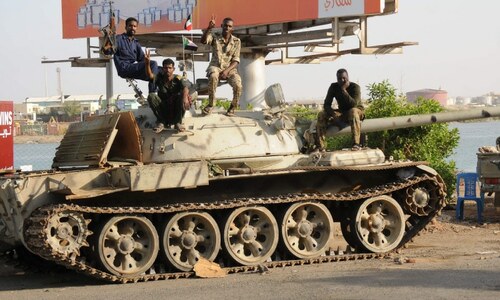
Senior army general Yassir al-Atta told Sudan state TV that the army had been trying to remove the RSF from homes, schools and hospitals.
Millions of civilians have been trapped as the army has used air strikes and shelling to target the RSF forces that embedded themselves in residential areas early in the fighting.
Asked about calls from some tribal leaders for civilians to be armed, Atta said this was not currently required but residents being attacked in their homes should be able to act in self-defence. “Let them arm themselves to protect themselves, that is a natural right,” he said.
Since the conflict began, unrest has flared in other parts of Sudan, especially the western region of Darfur.
Some 705 people have been killed and at least 5,287 injured, according to the World Health Organization, though the true death toll is believed to be much higher.