ISLAMABAD: South Asia is one of the regions most at risk due to extreme heat but the majority of its urban areas are ill-equipped to deal with the phenomenon, which is increasing in frequency, severity and complexity due to climate change.
This was stated in a new World Bank report which said that the region, home to a quarter of the world’s population, was accustomed to extreme heat, but rapid urbanisation and climate change were pushing the region’s limits of adaptation with lethal consequences.
The impacts of heat in South Asia are already emerging with over 3,600 heat-related deaths in India and Pakistan during the 2015 heat waves. More recently in 2022, at least one billion people in India and Pakistan experienced further record-breaking heat waves with temperatures reaching 51 degrees Celsius in some parts of Pakistan.
The report, ‘Urban Heat in South Asia: Integrating People and Places in Adapting to Rising Temperature’ said high-density living, along with low permeation of green and blue spaces, has created heat management challenges for a large number of communities in South Asia.
New report calls high-density, less green spaces ‘a challenge’; says ‘inclusive planning’ needed to mitigate effects
These environmental factors were important considering that heat adaptive measures, such as mechanical cooling through air conditioning, were rarely afforded in South Asia.
In many South Asian communities, air conditioning use is impractical due to erratic electricity supply or affordability.
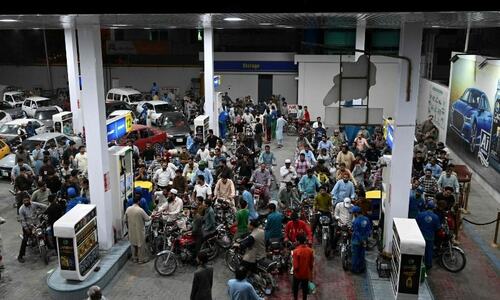
The report stated that across Pakistan, electricity demand often exceeded supply resulting in blackouts lasting three to four hours per day. These factors were not limited to low-income communities and extended across many urban communities in the region.
Data limitations
Urban heat is a rising risk across South Asian cities that is often underestimated and underreported. Unlike many other climate hazards, urban heat is a relatively predictable hazard that can be largely measured and protected against.
The report pointed out that the knowledge of urban temperatures in South Asia has been largely limited to satellite data or studies that have not accounted for spatial variability. This has limited the awareness and understanding of intra-urban heat differences in South Asian cities.
According to the report, South Asian cities face unique challenges, competing demands, and resource constraints, unlike anything in developed economies.
Still, lessons could be learnt from outside the region to understand best practices and potential heat management improvements, the report suggested.
Urban heat island
While explaining the complications of urban heat, the report said the heat has uneven spatial and social distributions, with wide variations in temperatures and adaptive capacities across buildings and cities around the world.
Urban areas often experience higher temperatures by absorbing more solar radiation than surrounding rural areas, a phenomenon called the urban heat island (UHI) effect, it stated.
The existing heat risks in cities were amplified by warming temperatures from climate change as the global surface temperatures have risen 1.1C above pre-industrial levels. These global effects of climate change are further amplified at a local level through the UHI effect.
The report said that between 1950-2017, 60 per cent of the world’s urban population experienced warming twice as large as the global average, and by 2100, 25pc of the world’s largest cities could warm by 7C
The report emphasised that future heat management efforts should be designed to address both social and spatial vulnerabilities.
Inclusive planning
The cities need to map out overall heat vulnerability, including both heat risk factors, such as building density, materials and access to green/blue spaces, and demographic and socioeconomic determinants, such as income, age, education, gender, health, and social isolation.
There should be inclusive heat planning and policymaking processes to address thermal inequities, particularly in the most vulnerable communities and population groups, the report stated.
The report urged policymakers in the region to ensure urban planning and development was adapted to higher temperatures in the face of climate change and the UHI effect.
The cities in the region should integrate people and place in managing the acute and chronic impacts of urban heat by better understanding the heat risks; garnering the necessary human, technical, and financial resources; and embedding urban heat resilience into planning and development processes, the report suggested.
Published in Dawn, April 30th, 2023