Exhausted, elated and cradling her newborn daughter in a rundown government hospital, young mother Manu Bala had just helped make India the world’s most populous nation.
Tears of joy and relief streamed down Bala’s cheeks as her as-yet-unnamed child — one of more than 67,000 born across India on Monday — rested on her chest.
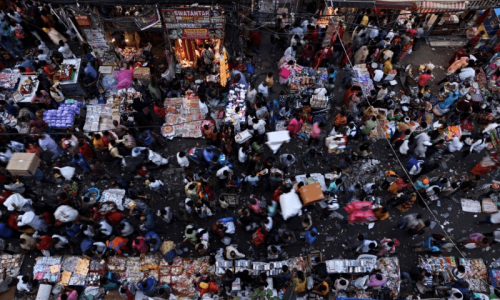
It was also the day the UN announced that India, already home to more than one in every six humans on the planet, would this week eclipse China with more people than any other country.
“I am very happy that my child was born on the day India left behind China — it feels special to become a mother on this day,” the 22-year-old housewife told AFP from her bed.
“I want my baby to study hard and become whatever she wants to become. I want to give her a good life.”
Bala had writhed in agony on her gurney inside the crowded and somewhat decrepit maternity ward of her Himalayan town’s public hospital.
Flanked by nurses in green and white overalls, her face turned pale as she lay on a bare bed with her feet mounted in stirrups.
“Push harder,” the doctor urged the first-time mother in the labour room, while her husband and mother-in-law waited anxiously outside.
Sweat trickling down her forehead, Bala winced in pain and clasped the sides of the bed before the final push, met with a round of cheers from the staff.
Holding the baby to her chest with relief writ large on her face, she mustered up one final reservoir of energy to thank the doctor and nurses.
‘One baby is enough’
Bala’s husband Rohit, a state government employee, was relieved that the birth was without complications and ecstatic about becoming a father.
He already has his mind turned to the weeks ahead: the family will have a naming ceremony 11 days after the birth, with the assistance of a Hindu priest consulting astrological charts for an auspicious moniker.
But beyond that, Rohit was fretting over the future awaiting his daughter.
“There are many problems we have to face because of the growing population,” the 30-year-old told AFP.
“Even for seeing the doctor here we had to queue up for so long.” India faces huge challenges in providing electricity, food and housing for its growing population.
Many of its cities struggle with water shortages, air and water pollution, and packed slums.
Millions of young people are entering the workforce each year and struggling to find opportunities in an economy that does not have the capacity to provide them all with jobs.
“Already there is so much unemployment in the country. It will become all the more difficult to get a job,” Rohit said.
“I think one baby is enough in today’s times. “