

IF even the Chinese are not safe here in Pakistan, who is?
Because of CPEC and Pakistan’s national interest, the Chinese are the most privileged and protected of all foreigners. Multiple layers of police and specially created army units keep them from harm’s way. Also, they are advised to keep a low profile and minimise contacts with locals, whether in Islamabad or Karachi or anywhere in Balochistan.
But, as this week’s events showed, even these precautions could not protect the Chinese from maddened, religiously charged mobs.
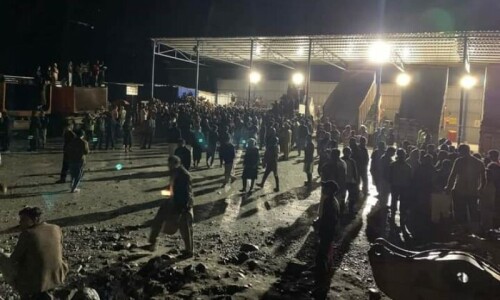
Work at the Dasu hydropower project stopped after a supervisor objected to long prayer breaks taken by workers. For the locals, this was blasphemy. Whisked away by helicopter to a lockup in Abbottabad, this man was luckier than Priyantha Kumara, the Sri Lankan manager of a Sialkot factory. Also accused of blasphemy, he was tortured to death and his corpse burnt by his workers.
Afghanistan excluded, such mediaeval age horrors are unknown in other Muslim-majority countries. Nor is blasphemy busting a national preoccupation elsewhere. Apart from dedicated mountaineers, who in his right mind would want to vacation in a country where the population is ready to burst into flames at the slightest provocation?
Elsewhere, tourists of all nationalities and religions are eagerly solicited and welcomed. The souks of Morocco and Egypt bustle with Americans, Europeans, Russians and Israelis, while Indonesia and Malaysia are popular destinations for Australians. Although UAE is formally under Sharia law, its relaxed social mores encourage people from everywhere to enjoy Dubai’s wonders.
Raging lynch mobs are common in Pakistan but unusual in other Muslim countries.
Pakistan is different. Scarcely any foreigner — white, Chinese or African — is visible on the streets or in the bazaars. Enrolment of foreign students in our universities is near zero. Major airports in Pakistan, constructed at enormous cost, are economically unsustainable for want of traffic. They have barely a handful of international flights daily with most passengers being Pakistani workers or expats.
Adding to the general perception of Pakistan as a dangerous place, earlier this week, Sweden announced indefinite closure of its embassy. Not far from it is Denmark’s embassy, car-bombed in 2008. Two other European embassies are said to have also quietly shut down or restricted their operations. Even in normal times, diplomats in Islamabad stay largely within the Red Zone, making only an occasional foray for vacations up north.
We are exceptional in other ways too. Lest memories fade, let’s recall that not only did Osama bin Laden find shelter in Pakistan, he was also hugely popular. According to the 2006 Pew Global Survey, the percentage of Pakistanis who saw bin Laden as a world leader grew from 45 per cent in 2003 to 51pc in 2005. In contrast, an identical questionnaire in Morocco, Turkey, and Lebanon showed his popularity dropping by 20 points.
What makes Pakistan so unique and different from other Muslim countries? To this end, I will make three observations.
First, those who run Pakistan have long assumed that religion alone can stick together Pakistan’s various regions. Maximum amounts of this epoxy must therefore be injected everywhere possible, particularly in education. Although the breakup of 1971 proved plentifully that the glue wasn’t strong enough, they chose to draw exactly the opposite conclusion. To quote Gen Ziaul Haq (1981), “Take the Judaism out of Israel and it will fall like a house of cards. Take religion out of Pakistan and make it a secular state, it would collapse.”
Elsewhere, one does not see such nervousness. Turkey? Egypt? Iran? Indonesia? Morocco? Being historically formed nation states, they are comfortable with Islam and do not have existential worries. Their national narratives are free from apocalyptic scenarios of disintegration and destruction.
Second, starting in the 1980s, Pakistan’s generals and clerics became symbiotically linked via the Kashmir jihad. Their so-called military-mullah alliance (MMA) created madressahs that became jihad factories. These eventually spun out of control. The 2007 Lal Masjid insurrection turned Islamabad into a war zone, leaving hundreds dead. It showed how impotent the state had become when confronted by the forces it had nurtured.
That impotence is glaringly evident today as well. Even in heavily policed Islamabad, it is estimated that two out of three mosques and madressahs are built on encroached land. Civic authorities stand helpless before this anarchy, unable to demolish hastily constructed structures. Government attempts to have the same prayer time for all mosques in Islamabad also foundered. Madressah reform is dead in the water. Instead, now that the Single National Curriculum is being implemented, regular schools have been turned into madressahs.
Compare this helplessness with Saudi Arabia, Egypt, Iran, or elsewhere. These states tightly regulate where mosques can be built. Even the design and architecture — pleasing aesthetics being mandatory — is specified. More importantly, they spell out what can be said or not said during Friday sermons. This limits hate speech. Hence, there are no lynch mobs and no Mashal Khans or Priyantha Kumaras.
Third, the purist fantasy of a theological state (specifically those of Ziaul Haq’s Nizam-i-Mustafa or Imran Khan’s Riyasat-i-Madina) is very much alive in Pakistan. Why demagogues can profitably use such slogans is easy to see. In a country that is deeply unequal, corrupt and plagued by huge class asymmetry, people yearn for an unblemished past when everything was perfect.
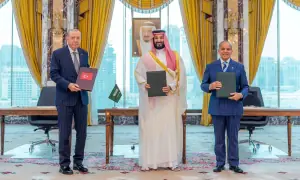
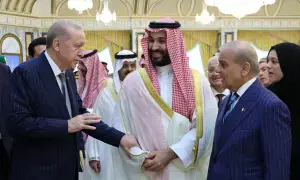
But note! The leaders of autocratic and authoritarian countries like Saudi Arabia, Egypt, Morocco, or Turkey are not peddling hype of some imagined past. Instead, Prince Mohammed bin Salman has vowed to transform the hardline kingdom of Saudi Arabia into an open society that empowers citizens and lures investors. While Recep Erdogan may privately ache for restoration of the caliphate abolished by Ataturk in 1924, only 8pc of his supporters want this.
For stability and prosperity, Pakistan will have to shed its illusions and become a normal country. This means that its diverse peoples must be held together consensually through shared needs and interdependence, not through some ideological diktat. The hyper religiosity promoted through state institutions and the toxic education in our schools is not getting us admiration anywhere. Instead, it is producing a wild, uncontrollable population. Even our friends now fear us.
The writer is an Islamabad-based physicist and writer.
Published in Dawn, April 22nd, 2023