0
0

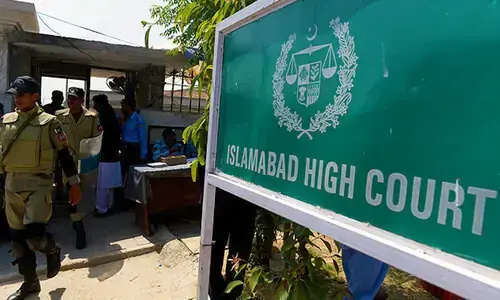
ISLAMABAD: The government on Monday took another defiant step against the Supreme Court, when a joint session of parliament adopted — albeit with some amendments — a bill seeking to curtail the powers of the chief justice of Pakistan, amid a noisy protest from PTI lawmakers.
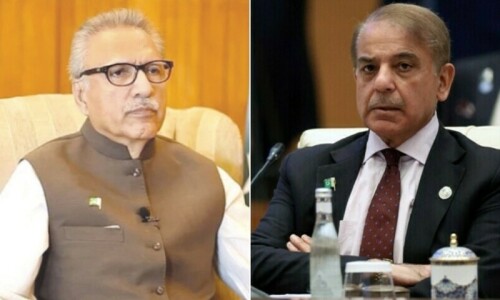
The bill, which was passed earlier by both houses but returned by President Arif Alvi a couple of days ago, was moved in the joint sitting by Law Minister Azam Nazeer Tarar, as PTI lawmakers from the upper house chanted slogans decrying the move.
As per the Constitution, the bill will be sent to the president once again for his assent, and if he does not sign it within ten days, assent will be deemed to have been granted.
According to the fresh legislation, a three-member bench consisting of the chief justice and the two senior-most judges of the apex court will decide whether or not to take up a matter suo motu. Previously, this was solely the prerogative of the chief justice.
Draft law seeking to restructure CJP’s powers sees minor amendments; minister says bill will fix rules framed during ‘dictator’s tenure’
The law also states that every cause, matter, or appeal before the apex court would be heard and disposed of by a bench, constituted by a committee made up of the chief justice and the two senior-most judges.
The legislation also includes the right to file an appeal within 30 days of the judgement in a suo motu case and that any case involving constitutional interpretation will not have a bench of fewer than five judges.
The bill would allow former prime minister Nawaz Sharif and other parliamentarians disqualified by the Supreme Court under suo motu powers (such as Jahangir Tareen) to appeal their disqualification within 30 days of the law’s enactment.
Speaking during the joint sitting, Mr Tarar rejected the impression that the judiciary’s powers were being abridged under the bill.
“We have increased their powers and brought transparency to the affairs of the Supreme Court through this bill,” he remarked.
He said the Supreme Court rules were framed during a dictator’s tenure, but now this law would remove the impression of an ‘imperial court’ and end the ‘one-man show’ in the apex court.
He also advised President Arif Alvi to act as the head of the state, rather than behaving as the worker of a political party.
An amendment in the bill moved by Jamaat-i-Islami Senator Mushtaq Hussain was rejected by the house, however minor amendments suggested by PML-N Senator Shaza Fatima Khawaja were okayed.
Expressing his views in the house, Senator Mushtaq Ahmad said the bill’s intentions were good to the extent that it seeks to bring to an end the judiciary’s intervention in the affairs of the parliament, but said parliament should also move to stop the military establishment’s intervention.
He also said he was a strong opponent of person-specific and retrospective legislation.
Later, the house also adopted two identical resolutions, calling for the simultaneous conduct of general polls to the national and all the four provincial assemblies.
Published in Dawn, April 11th, 2023