THERE is still much uncertainty surrounding the impending elections for the Khyber Pakhtunkhwa and Punjab provincial assemblies, even though the Supreme Court’s intent behind initiating suo motu proceedings on the matter appears to have been the exact opposite.
The court has spoken, through a split verdict, to reiterate that elections must be held within a 90-day period, yet it has also blurred the timeline somewhat by making an allowance for a “barest minimum” deviation from the deadline.
Importantly, the verdict has clarified that the announcement of an election date for a dissolved provincial assembly is the constitutional responsibility of the governor of the said province if the dissolution is made by their hand; otherwise, it becomes the president’s prerogative to do so.
It has further stressed that the announcement of an election date must be made “swiftly and without any delay and within the shortest time possible”, and that the Election Commission must “proactively” make itself available for this purpose.
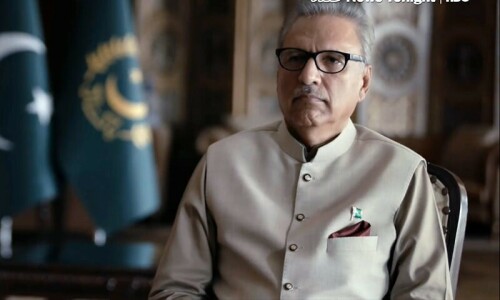
While clarity on the question of whose responsibility it is to announce election dates had been needed after President Arif Alvi made his unilateral announcement, it appears in retrospect that the Supreme Court could perhaps have done without involving itself in this case.
Questions about the composition of the bench originally formed to hear the case, accusations of bias and impropriety, and strong objections from some of the justices nominated to the bench hurt the judiciary during this time of national crisis.
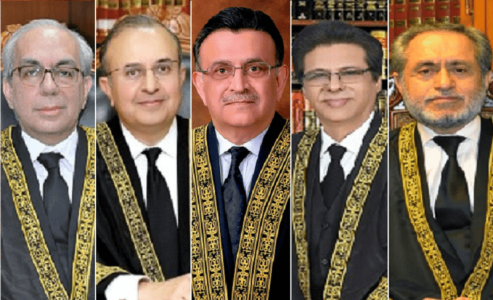
Indeed, the dissenting note from Justices Jamal Khan Mandokhail and Syed Mansoor Ali Shah outlines some pertinent reasons for the court to have allowed the high courts of KP and Punjab, which have both been deliberating similar cases, to settle the issue instead.
The opportunity had presented itself for the chief justice to form a full-court bench and put a firm end to the controversy created by his suo motu notice. It is unfortunate that the opportunity was foregone. Another pertinent question could also have been resolved with the present case: when and under what conditions should an assembly be dissolved?
A well-reasoned answer would have greatly helped reinforce the public’s right to representation, but the matter was, unfortunately, set aside. Be that as it may, it is imperative for the government to now stop trying to delay the elections and enable the Election Commission to proceed with discharging its responsibility.
The Constitution was always quite clear regarding the 90-day deadline to hold elections, whether or not the Supreme Court had intervened. The PDM government seems disturbingly intent on putting off the electoral exercise on some pretext or the other.
After the Supreme Court ruling, its delaying tactics will put it on a collision course with the judiciary. One hopes that we are not being led into a fresh crisis.
Published in Dawn, March 2nd, 2023