HYDERABAD: Spea-kers at a three-day international conference said civil engineers were supposed to leave a sustainable world to posterity and sustainable development for the present generation.
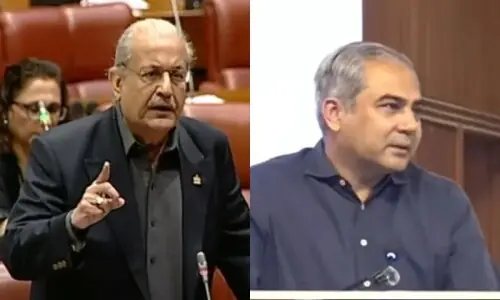
Speaking at the moot titled “Sustainable Development in Civil Engineering” which began on Thursday, Mehran University of Engineering and Technology (MUET) Jamshoro Vice Chancellor (VC) Prof Dr Tauha Hussain Ali said that sustainable development was not only meant buildings and roads infrastructure, but an overall sustainable growth in society.
He said that civil engineering was the largest department of the MUET and it earned most of the income. He said that now every department had to meet its expenses through research activities, expertise and potential after budgetary constraints.
He said teachers and students of civil engineering played an important role for organising the event.
Speaking as chief guest, Sindh Agriculture University (SAU) VC Dr Fateh Mari said that engineers had to play their role for bringing land under cultivation in Sindh and rest of the country as national economy largely depended on agriculture while farmlands remained uncultivated.
He said engineers played an important role in the country’s economic growth and added that Sindh’s two barrages, Kotri and Guddu, were built by Pakistani engineers.
He urged engineers to always concentrate on meeting timeline of any project, its design and allocated budget. He said the 60s marked the decade of green revolution to ensure food security. During the 70s canal system was developed along with road infrastructure for which credit went to engineers.
Prof Dr Douglas Barreto, a teacher from Brazil, said that different countries had started paying attention to cities and buildings’ construction in the last decade to deal with environmental issues that were results of man’s attempts to tinker with nature.
He said that out of the sustainable development goals (SDGs), SDG-6 pertained to clean water and sanitation and added that SGD-7 dealt with cheap and clean energy and SDG-11 targetted sustainable cities and communities.
He said that those goals directly dealt with cities and buildings and added that the UN had urged the member countries to ensure achievement of those targets.
He said that 6.2 billion people in the world were living without access to clean drinking water, 3.6bn without drainage, 2.3bn without sanitation and 759m people were without electricity and clean energy. He said that engineers and researchers must think collectively in the conference.
Dr Rizwan Memon said 128 research papers were received for the conference and 60 of them were accepted after a scrutiny.
He said that researchers and scholars from Brazil, Australia and Malaysia would address the conference and students would learn from their experience.
Published in Dawn, February 17th, 2023