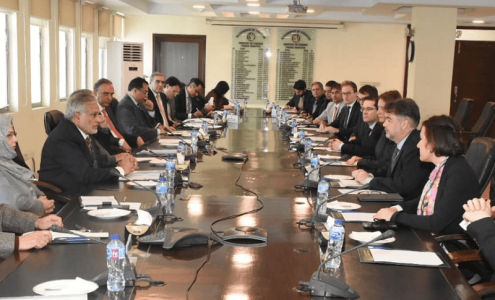
THERE is still confusion over where matters stand between the government and the IMF. On Friday morning, Pakistan received the ‘Memorandum of Economic and Financial Policies’ draft, the key document stipulating the conditions, steps and policy actions that will form the basis of the staff-level agreement with the IMF.
The government is interpreting it as the ‘settlement’ of its differences with the Fund. Yet the IMF mission’s departure from the country without finalising the agreement indicates that large gaps still remain to be bridged.
The IMF’s carefully crafted, short concluding statement on the 10-day loan talks further underscores these gaps, despite the “considerable progress” on measures to remedy domestic and external imbalances.
That the IMF statement stresses the need for permanent revenue measures to strengthen Pakistan’s fiscal position implies that the lender isn’t satisfied with the government’s plan to boost revenues through temporary actions.
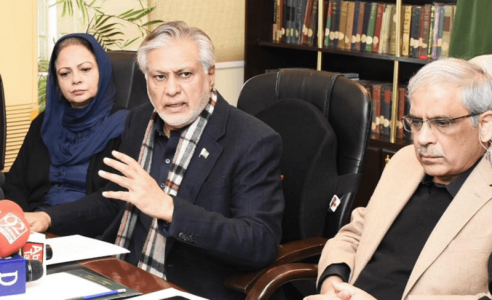
Similarly, Finance Minister Ishaq Dar’s early morning presser yesterday failed to give a clear picture of the position of the two sides on the issues under discussion.
What we know is that Islamabad has agreed to impose taxes of Rs170bn, reduce untargeted gas and energy subsidies, increase PDL on diesel by Rs10 to Rs50, raise allocations for BISP by Rs40bn and cap the gas sector’s circular debt at its current level.
With negotiations on the MEFP to continue virtually from Monday to discuss the measures needed before the final agreement is signed, it is hoped that the two sides will hammer out their differences in the next few days. The outcome of the virtual discussions will nevertheless depend on how wide apart the current positions are on the issues on the table.
The onus of convincing the Fund to soften some of its conditions and settle differences will obviously be on Islamabad. Pakistan has so far found it tough to deal with the Fund in recent months due to the former’s weakening credibility.
As a result, we have seen its reserves drop critically — to below $3bn because of dwindling official foreign inflows.
We don’t know exactly what the final agreement with the IMF would entail for the people. However, it is clear that the measures that are needed to put the economy back on track would bring significant hardship to the common Pakistani, a price that can no longer be avoided or minimised, unfortunately.
Conversely, the failure to close the deal quickly will have more serious consequences. There is a lesson to be learnt from Sri Lanka. Things can get a lot more difficult for Pakistan if the talks drag on unnecessarily.
Even a quicker agreement will not fetch us the IMF dollars before the middle of next month, but it will unlock inflows from friendly countries and multilaterals to help shore up the fragile external sector.
Published in Dawn, February 11th, 2023