0
0

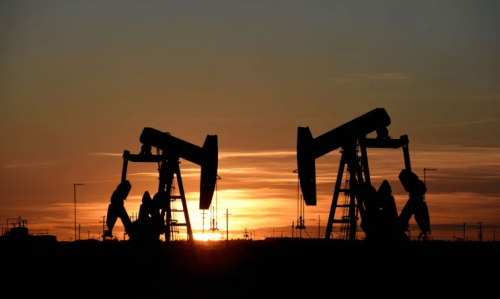
Oil prices fell on Monday, giving up earlier gains, as global producers this week will likely keep output unchanged during a meeting this week and investors are cautious ahead of a US Federal Reserve meeting that may spur market volatility.
Brent crude futures fell 20 cents, or 0.2 per cent, to $86.46 a barrel by 0435 GMT while US West Texas Intermediate crude was at $79.57 a barrel, down 11 cents, or 0.1pc.
Ministers from the Organisation of the Petroleum Exporting Countries (Opec) and allies including Russia, known collectively as Opec+, are unlikely to tweak their current oil output policy when they meet virtually on Feb 1.
Still, an indication of a rise in crude exports from Russia’s Baltic ports in early February caused Brent and WTI to post their first weekly loss in three last week.
“No change to the Opec+ output is expected to be announced at this week’s meeting and we expect outlook commentary from the US Fed to be the key driver of the outlook in the near term,” said National Australia Bank analysts in a research note.
Ahead of the Federal Reserve’s policy meeting scheduled on Jan 31-Feb 1, the market broadly expects the US central bank to scale back rate hikes to 25 basis points (bps) from 50 bps announced in December, which may ease concerns of an economic slowdown that would curb fuel demand in the world’s biggest oil consumer.
Oil prices earlier gained amid tensions in the Middle East following a drone attack in oil producer Iran and as China, the world’s biggest crude importer, pledged over the weekend to promote a consumption recovery that would support fuel demand.
“It is not really clear yet what’s happening in Iran, but any escalation there has the potential to disrupt crude flow,” said Stefano Grasso, a senior portfolio manager at 8VantEdge in Singapore.
“We have Russia on the supply side and China on the demand side. Both can swing by more than one million barrels per day above or below expectation,” said Grasso, formerly an oil trader with Italy’s Eni.
“China seems to have surprised the market in terms of how fast they are coming out of zero Covid while Russia has surprised in terms of resilience of export volume despite the sanctions.”
China resumes business this week after its Lunar New Year holidays. The number of passengers travelling prior to the holidays rose above levels in the past two years but is still below 2019, Citi analysts said in a note, citing data from the Ministry of Transport.
“Overall international traffic recovery remains gradual, with high-single to low-teens digits to 2019 level, and we expect further recovery when outbound tour group travel resumes on Feb 6,” the Citi note said.