Low turnout marks polls for Tunisian parliament
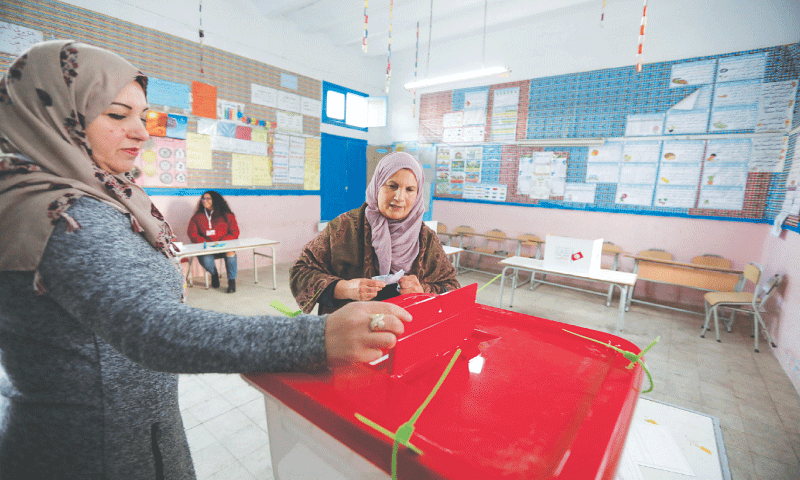
TUNIS: Polling began in the second round of elections for Tunisia’s toothless parliament on Sunday, but as the divided nation grapples with economic woes, all eyes will be on turnout.
According to late night reports, the turnout was a meagre 11.1 per cent.
A handful of voters trickled through a polling station in central Tunis on Sunday morning, casting ballots for a total of 262 candidates competing for 131 seats in the new legislature.
The body has been largely stripped of its authority following President Kais Saied’s dramatic power grab in the birthplace of the Arab Spring uprisings.
On July 25, 2021, Saied sacked the government and froze parliament before dissolving it and pushing through a new constitution granting him almost unlimited powers, sweeping away the system that had emerged from the 2011 revolt.
The latest polls, whose first round in December saw just 11.2 per cent of registered voters take part, are seen as the final pillar of Saied’s transformation of politics.
The new legislature will have almost no power to hold the president to account. “There’s no way I’m voting,” said Mohamed Abidi, 51, a waiter at a cafe in Tunis.
“Saied isn’t listening to anyone to find solutions for our situation. The whole economy is suffering but he’s not interested — he only wants to keep his place in the presidential palace.” But taxi driver Belhassen Ben Safta disagreed.
“We’ve got to vote! We can’t leave even the slightest possibility that the old system returns.” Analysts predict few of Tunisia’s 7.8 million eligible voters will cast their ballots in the second round, as major parties including Saied’s arch-rivals, the Islamist-inspired Ennahdha, call for a boycott.
The ISIE elections watchdog said that by 11am, around 4.7pc of voters had cast their ballots, slightly more than at the same time during the first round.
Youssef Cherif, director of Columbia Global Centers in Tunis, said “this parliament will have very little legitimacy, and the president, who is all-powerful thanks to the 2022 constitution, will be able to control it as he sees fit.” Cherif also noted Tunisians’ “lack of interest” in politics. With inflation at over 10pc and repeated shortages of basic goods from butter to cooking oil, Tunisia’s 12 million people have been focused on more immediate issues.
Ratings agency Moody’s on Saturday downgraded Tunisia to Caa2, citing “the absence of comprehensive financing to date to meet the government’s large funding needs”. Omrane Dhouib, an apprentice baker in the capital, said he was struggling to make ends meet, and had no faith in any of the country’s political elite. “Saied had the chance to make radical changes. He seized all powers but he did nothing,” he said.
More than 32,000 Tunisians are estimated to have made clandestine bids to reach Europe over the past year, as poverty and unemployment rise.
The election takes place in the shadow of Tunisia’s drawn-out negotiations with the International Monetary Fund for a bailout worth nearly $2 billion.
Published in Dawn, January 30th, 2023