0
0


POLYBIUS, an eminent ancient scholar, analysing the Roman Empire, came to the conclusion that it was made of a mixture of aristocracy, monarchy and despotism. He was the first analyst to say that despotism is prevalent only when one power is concentrated in one single hand.
To check the despotic tendencies, he introduced the system of checks and balances in the organs of state; the executive, the legislative and the judiciary. Later, a large number of philosophers propounded the concept of the theory of separation of powers and of putting checks and balances within systems of governance.
Even if the theory of separation of powers is largely attributed to French philosopher Baron de Montesquieu, the fact is that philosophers like John Locke and William Blackstone had already expressed thoughts on the matter.
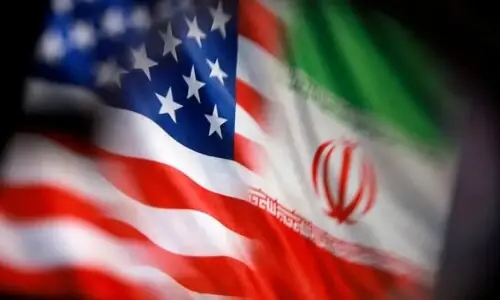
In the present era, when we see that the United States is far more successful in practising the theory of separation of powers, it should serve as an example for the developing countries, including Pakistan. The US has a long tradition of state organs working efficiently and functioning in a balanced manner. The way it runs the machinery of the government makes it more pronounced than many other states.
The executive branch of the US system is entrusted with vast powers, but it cannot be the sole power-wielder as its actions are under scrutiny of the legislative branch. For instance, the US president is the commander-in-chief of the armed forces, but the power of purse lies in the hands of Congress. He is required to take financial action only with the approving nod of Congress.
And he cannot declare war without the mandatory consent of the Senate.
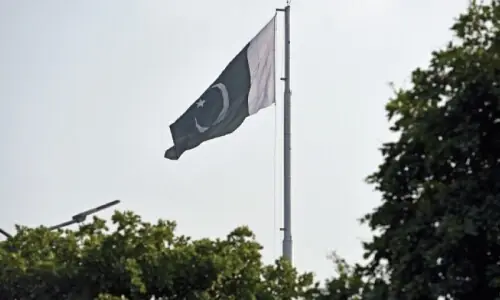
It is clear that what the political system is missing in Pakistan is the mechanism of checks and balances. Our institutions are almost dysfunctional, leading to grave issues at all tiers of society. For instance, the civil service is under the influence of politicians, so public service delivery is rare to find. Flawed and politicised organs cannot be expected to have operational autonomy; rather, everything goes in the wrong direction.
In parliamentary form of government, the executive and the legislative organs are inextricably intertwined, while the judiciary functions and acts independently of these two. Is that the case at our end? Hardly, if at all.
Abdul Qadeer Seelro
Larkana
Published in Dawn, January 26th, 2023