12
12

When the coalition led by the PML-N came to power after ousting Imran Khan through a vote of no-confidence, it inherited a bad economy with fires burning everywhere, which it has been struggling to put out without much success.
In between the no-confidence vote and now, the PML-N has lost a good deal of political capital in its fortress of Punjab, as reflected by its defeats in the by-elections and the thumping PTI victory.
Not only that. In this struggle, the party also lost ‘reform-minded’ finance minister Miftah Ismail, whose prognosis of the economic problems has recently endeared him to Lahore University of Management Sciences and Institute of Business Administration economists.
Ishaq Dar, a veteran interventionist who firmly believes in a strong home currency for some valid and other not-so-valid reasons, brought in to manage the economy and uplift PML-N’s political fortunes, is yet to deliver.
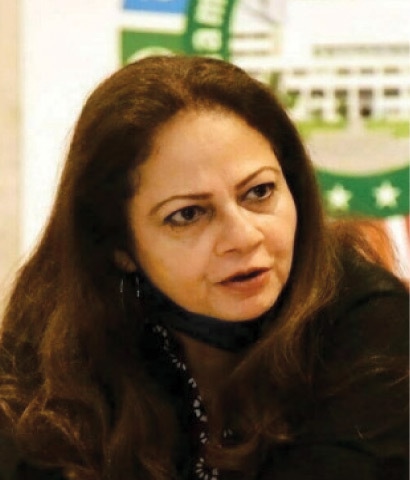
As Pakistan heads into the new year with the economy teetering on the brink, Dawn spoke with Dr Ayesha Ghaus-Pasha, the state minister for finance. Below are the excerpts from her interview conducted via Zoom:
Question: Please elaborate on the nature of the current economic crisis for lay readers. Also, explain how it is different from — or more intense than — the previous crises.
Answer: There’s hardly any period in Pakistan’s history when we weren’t facing an economic crisis. Every boom and bust crisis that we have confronted in the past was more intense than the previous one.
That is because we never tried to deal with the structural issues and always looked for quick fixes. The result is that the more minor crises have become systematic and far more intense than the ones seen in the past. Short-term solutions will not help us tackle the present challenges facing the economy.
When we came into power, the country was in an International Monetary Fund (IMF) programme, but it was suspended because we had not implemented the lender’s conditions. The Fund had already indicated its unhappiness and unwillingness to continue any further.
It meant that our chances of meeting our external financing needs had shrunk. During the last financial year, our imports shot up beyond $72 billion, and we had only $31bn from our export earnings to finance this trade deficit. Even if we count in remittances of $31bn, we still were short of $10bn.
Like our external imbalances, we also have been running large fiscal deficits in the range of 7-8 per cent of GDP. This is also part of the same story: we are living beyond our means. Our expenditure is more than tax and nontax resources we can mobilise. That’s why the previous PTI government increased the country’s domestic debt burden much more rapidly than ever seen in Pakistan’s history.
Q: So basically, you are saying that our economy is afflicted with structural issues and problems that no previous government has tried to tackle?
A: Yes. We have in the past circumvented these issues by taking loans from the IMF, getting external financing from other sources or injections through the war on terror. So when we keep getting money from outside, we stay solvent, and when this stops, we go under.
My point is that we have lived like this for the last 75 years. When will we understand that things have to change?
After we came to power, we tried to control the situation. We achieved some success in the sense that we were able to revive the IMF programme, our inflows from multilateral and bilateral sources are starting to increase, and confidence in Pakistan is building. Things are moving in the right direction and slightly improved.
I wouldn’t say that all is well or everything has improved. But I’d say that the pace of economic deterioration is controlled. There are indicators that things are picking up.
Q: You revived the IMF programme after months of hard work but we see it has again run into trouble after the release of one tranche. The ninth review of the programme has been delayed and so is the much-needed next loan tranche. What has gone wrong? What factors have led to this impasse with the IMF?
A: Let me first state very unambiguously that the programme isn’t suspended. We are constantly engaging through virtual meetings and talking with IMF. Even on the last day before the winter holidays, we spoke with IMF officials. So the ninth review is consistently being conducted virtually.
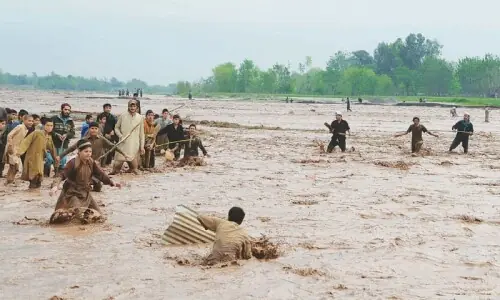
The review has indeed been delayed, but it is because of the floods. The IMF wants us to assess how these floods will affect our budget and how we will finance rehabilitation and reconstruction. This has delayed performance review because this assessment was to be carried out by the World Bank and Asian Development Bank in collaboration with the planning ministry and the National Disaster Management Authority.
It is a big exercise and takes time to complete.
We have arranged a donor conference in Geneva to seek the world’s help for post-flood rehabilitation and reconstruction on January 9. Only after that will we know how many resources the world is ready to provide us and how we can mould our development programme.
I’m hopeful that once the donor conference is over, we will make rapid progress on the performance review and reach a staff-level agreement with the Fund.
Q: Is this the only cause of tensions with the IMF, or are other issues like the imposition of additional taxes and energy prices impeding the agreement?
A: Let me tell you that our tax revenue collection during the first quarter of the present fiscal year has exceeded the target. But it is also true that the contraction in economic activity will affect tax revenues going forward. We will not impose additional taxes until it is clear that we cannot meet our revenue targets through other means.
The IMF basically wants us to meet our understanding of the primary budget surplus target (deficit other than debt payments). We will move towards additional taxation only if we cannot match our primary budget surplus target. There’s no demand for new taxes on the table so far.
Once we are clear in our exact resources, expenditure and primary balance, only then will we consider additional taxation measures. And that too in case we are unable to mobilise resources from other sources.
Let me also make it clear here that we are not in favour of unnecessarily burdening people with additional taxes. Even in our budget, we taxed those who have the means to pay more taxes. Even if we have to take such measures, we will do our best not to burden the common man.
The other thing pertains to untargeted energy and fuel subsidies. Not even developed countries can afford or sustain selling electricity and fuel at less than their production/purchase cost on a long-term basis. The IMF wants us to correct this anomaly.
After coming to power, we have taken measures to correct this untenable situation by removing fuel and power subsidies announced by the previous PTI government that worsened our financial crisis. People have supported us in that. They (PTI ) had created a large power sector circular debt which we are developing a mechanism to liquidate.
We are negotiating these things (with the IMF) and I’m hopeful that we will soon progress on an agreeable formula, mechanism or roadmap for this.
Q: Despite what you’ve done to bring IMF back, the markets remain jittery about the possibility of Pakistan defaulting on its debt obligations. Then, we see our reserves falling to dangerous levels, and the promised funding from bilateral and multilateral sources isn’t forthcoming, no matter what Ishaq Dar says.
A: Let me first quash these speculations about Pakistan defaulting on its debt payments. There is no chance of us defaulting on foreign debt obligations this year. We are honouring our debt obligations and have the resources for that.
Now to financing requirements (of nearly $34bn) for this fiscal year. Let me tell you that we are engaged with multilateral agencies and countries like Saudi Arabia, China and others for additional support, as stated by Mr Dar. There’s some improvement in inflows.
Yes, there have been delays in the process, but we are hopeful that these promised inflows will materialise soon. Also, we will get debt rollovers.
Q: How long shall we depend on loans?
A: We seriously believe Pakistan needs foreign direct investment to boost its liquidity. Whether it comes via joint ventures with Pakistani companies or through purchasing shareholdings in our existing entities doesn’t matter. This is the long-term solution to our liquidity troubles.
The government should not be directly setting up electricity generation plants but regulating and managing service delivery. It is time for us to understand this and work on this.
This is not an easy job, but we are moving in this direction and working hard on improving laws, procedures and processes, building momentum, and convincing the public to create ownership and so on. We want to move forward in this direction because we believe it is in the larger interest of the country. You will soon see progress on this as well.
This government has incurred a significant political cost for correcting the problems it had inherited. We know we need to work consistently to address the structural issues of our economy for long-term sustainability.
Q: With hardly seven to eight months left to the completion of this government’s tenure, will you be able to make any big difference even if you undertake the required structural reforms?
A: Pakistan has suffered a lot because of delays. It is imperative to make progress on this road if we are to pull the country out of the low growth mode.
We will do whatever is possible in this short period, even if we cannot make big strides. We are trying to fix our pricing, fiscal and monetary policies, improve our real and power sectors and so on. We will do whatever we can in this government’s time before the elections.
Q: We may not be on the verge of default, but the market doesn’t believe this. Take the example of a declining exchange rate.
A: The fundamental problem of the gap between dollar demand and supply is putting pressure on the exchange rate. For this, we need to rationalise our imports and reduce our oil consumption, as energy constitutes one-third of our imports. The energy prices have shot through the roof because of supply disruptions in the Ukraine war and the commodity super cycle.
Besides, the global recession and US monetary tightening have also created problems for counties like Pakistan. All countries like ours are facing exchange rate depreciation and high inflation. Some are even in worse shape. Every country is trying to adjust to these realities.
Our people must realise that when nations have to contend with such phases, they can easily overcome these troubles if they face them together and make adjustments.
Q: How do you look at the economy faring in 2023?
A: The year 2023 will be a tough year for us and the global economy, as forecast by the IMF. Our exports are falling due to the international recession, and our exporters will have to compete harder to get a share of the contracted export market.
The impact of global conditions on our economy cannot be avoided as we are integrated with the international economy to the extent of our imports and exports. We have given our exporters incentives, and now it depends on them how far they can compete and increase their market share in current conditions.
We are also trying to incentive remittances. But when the world is in recession, no economist can promise that we can fix things in our country. All we can do is somehow cushion our businesses against and curtail impact of global shocks on them.
As far as growth is concerned, I hope that it will start improving from the next fiscal year from the projected 2pc this year, depending on how quickly we revive our economy. We may not be able to achieve 5-6pc GDP growth immediately in the subsequent years without addressing structural issues but the economy will start showing improvements. If flood reconstruction starts significantly, the external sector improves, and business confidence revives, we can escalate growth.
Published in Dawn, The Business and Finance Weekly, January 2nd, 2023