THE more things change, the more they stay the same. The word is that our political (and apolitical) overlords are once again deliberating the possibility of a government comprising technocrats to pull the country out of its current crises.
Earlier this week, former FBR chairman Shabbar Zaidi, himself a technocrat, suggested that there had been high-level discussions on the topic. Later, PTI leaders Imran Khan and Fawad Chaudhry publicly lashed out against the possibility of a technocratic set-up, with the latter calling it “a joke”.
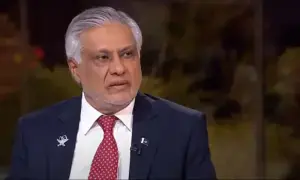
Now, former National Assembly speaker Asad Qaiser’s comments during a recent TV interview have confirmed that the topic is indeed under debate in political circles. According to Mr Qaiser, the suggestion of an interim set-up comprising technocrats was ‘informally’ proposed to him by the incumbent government.
However, since the PML-N’s Khurram Dastagir during the same TV show distanced his party from the proposal, it is unclear who is behind the idea being reinserted in the political narrative.
Every half decade or so, our ‘intellectuals’ circle back to the realisation that our political class is in over its head. Each time, good sense prevents them from committing a grave mistake.
The idea of unelected technocrats running the government is a bad one. By asking ‘who else will make all the difficult decisions’, it seeks to push actual politicians away from national-level decision-making. Cut through the rhetoric, and it is just a roundabout way of imposing a dictatorship in which unelected civilians act as a front.
Even if such a set-up is able to midwife the country through a crisis, it can only do so at a great cost to democracy. Therefore, the political class should resist it on principle without going into what they can gain and will lose under a technocratic set-up.
The ‘need’ for a technocratic set-up is a no-confidence motion against our politicians’ ability to lead. It is worth asking that if they agree to bring in an interim set-up overseen by technocrats to provide solutions to our challenges of governance and order, what role will they have left?
If they would rather abdicate their responsibility to fix what they have broken and leave it to unelected technocrats to figure out, do we even need such politicians in the first place? Would it not be logical to just do away with such fair-weather democrats and have dedicated technocrats manage the country in perpetuity?
If the answers to these questions are too unsettling, our political leaders should really take stock. Treating governance as a self-serving exercise to boost one’s chances for the next election is precisely what has gotten us to this point.
Agreeing to let technocrats fix the country is just an admission of that guilt. If our parties are unable to take difficult decisions, perhaps they should reconsider their claims to national leadership.
Published in Dawn, December 31st, 2022