Ousted Myanmar leader Suu Kyi jailed for total of 33 years

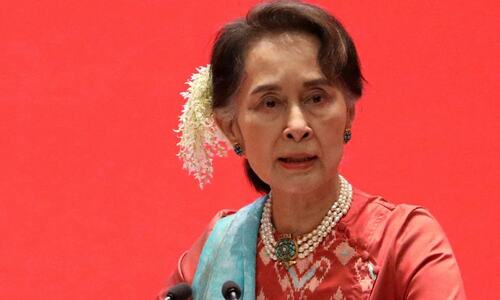
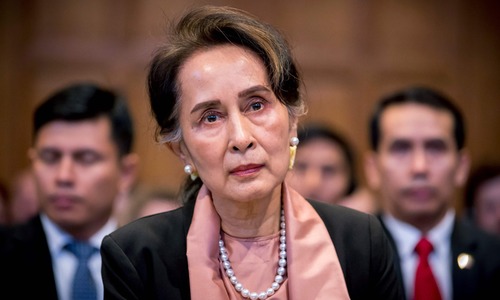
Ousted Myanmar democracy leader Aung San Suu Kyi was sentenced to another seven years in jail as her long series of trials ended on Friday, with the Nobel laureate now facing more than three decades behind bars.
A prisoner of the military since a coup last year, Suu Kyi, 77, has been convicted on every charge levelled against her ranging from corruption to illegally possessing walkie-talkies and flouting Covid restrictions.
On Friday, she was jailed for seven years on five counts of corruption related to the hiring, maintaining and purchase of a helicopter for a government minister, a case in which she allegedly caused “a loss to the state”.
Suu Kyi — sentenced to a total of 33 years following 18 months of court proceedings that rights groups have dismissed as a sham — appeared in good health, a legal source familiar with the case told AFP.
“All her cases were finished and there are no more charges against her,” said the source, who requested anonymity as they were not authorised to speak to the media.
Journalists have been barred from attending the hearings and Suu Kyi’s lawyers have been blocked from speaking to the media.
The road leading to the prison holding Suu Kyi in the military-built capital Naypyidaw was clear of traffic ahead of the verdict, said an AFP correspondent in the city.
Former Myanmar president Win Myint, who was co-accused with Suu Kyi in the latest trial, received the same sentence, the source said, adding that both would appeal.
Since her trial began, Suu Kyi has been seen only once — in grainy state media photos from a bare courtroom — and has been reliant on lawyers to relay messages to the world.
Many in Myanmar’s democracy struggle, which Suu Kyi has dominated for decades, have abandoned her core principle of non-violence, with “People’s Defence Forces” clashing regularly with the military across the country.
Last week, the United Nations Security Council called on the junta to release Suu Kyi in its first resolution on the situation in Myanmar since the coup.
It was a moment of relative unity by the council after permanent members and junta allies China and Russia abstained, opting not to wield vetoes following amendments to the wording.
‘Ridiculous’
The corruption charges were “ridiculous”, said Htwe Htwe Thein, an associate professor at Curtin University in Australia.
“Nothing in Aung San Suu Kyi’s leadership, governance, or lifestyle indicates the smallest hint of corruption,” she said.
“The question now will be what to do with Aung San Suu Kyi,” said Richard Horsey of the International Crisis Group.
“Whether to allow her to serve out her sentence under some form of house arrest, or grant foreign envoys limited access to her.
“But the regime is unlikely to be in any rush to make such decisions.”
The military alleged widespread voter fraud during elections in November 2020 that were won resoundingly by Suu Kyi’s National League for Democracy (NLD), though international observers said the polls were largely free and fair.
The junta has since cancelled the result and said it uncovered more than 11 million instances of voter fraud.
Suu Kyi’s convictions “aim to both permanently sideline her, as well as undermine and ultimately negate her NLD party’s landslide victory,” said Phil Robertson of Human Rights Watch.
Myanmar has been in turmoil since the military seized power, ending the Southeast Asian nation’s brief experiment with democracy and sparking huge protests.
The junta has responded with a crackdown that rights groups say includes razing villages, mass extrajudicial killings and airstrikes on civilians.
More than one million people have been displaced since the coup, according to the United Nations children’s agency.