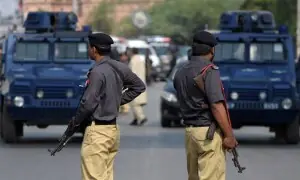
AS an incipient wave of terrorism — fuelled primarily by the TTP — starts spreading across Pakistan, particularly affecting the settled and tribal districts of KP, the administration finally seems to have woken up to the grave nature of the threat. In a statement on Wednesday, Prime Minister Shehbaz Sharif promised to clamp down on terrorism, and pledged to “fully implement” the National Action Plan and equip KP’s Counter-Terrorism Department with the tools and facilities needed to fight militancy. Considering the steadily rising cases of terrorism over the last few weeks, it would be fair to ask why the civilian and military leaderships didn’t arrive at these conclusions earlier, when civil society, particularly the residents of the militancy-affected areas, were calling upon the state to protect them from the emerging threat. However, perhaps better late than never; there is still time to neutralise the monster of militancy before it spreads its tentacles any further. It took the deadly siege of the Bannu CTD facility by TTP fighters to apparently shake the state out of its lethargy, but there have been other worrying incidents, such as the militant raid on a police station in Wana early on Tuesday, as well as a string of grisly beheadings in Tank and Bannu, of security men and individuals dubbed government ‘spies’ by the terrorists.
Regarding the revival of NAP and counterterrorism bodies such as Nacta, it appears as if the state went into hibernation after the last wave of terrorism subsided and relative peace was restored. However, countering militancy in Pakistan is a continuing process, principally because — due to our own sins of omission and commission — the militant infrastructure in the country was never completely uprooted. In particular, after the Afghan Taliban took Kabul last year, and parleys were launched with the TTP, there were fears, which have now been realised, that the militants would stage a comeback. Yet the state played down the threat. Now, NAP has been retooled, and divided into kinetic and non-kinetic domains, while a new homeland security body has been proposed. As far as NAP’s implementation goes, the immediate priority should be to enforce the kinetic goals, while working on longer-term aims. And before creating a new security body, the role of the present institutions needs to be discussed and rationalised, as instead of creating multiple departments with overlapping domains, a more streamlined counterterrorism approach is required to deal with the militant threat.
Published in Dawn, December 22nd, 2022