203
203

THE Pakistan-India bilateral relationship has never been a normal one, experiencing cycles of intense rivalry and even all-out war, alternating with cold peace and efforts to mend fences. The current phase is a decidedly negative one, with relations having dipped considerably after India’s controversial annulment of held Kashmir’s autonomy in 2019.
However, over the past few months there have been a number of unpleasant exchanges involving top officials of both countries. In October, the Indian defence minister issued a provocative statement threatening to ‘retake’ Gilgit-Baltistan, while the next month, a senior Indian general made a similarly hostile remark, threatening to ‘retake’ Azad Kashmir.
The situation over the past few days has deteriorated considerably, with Interior Minister Rana Sanaullah saying earlier this week that India was involved in acts of terrorism on Pakistani soil, and pointing to New Delhi’s alleged involvement in last year’s Johar Town blast in Lahore. This was followed a day later by Minister of State Hina Rabbani Khar telling a presser that “no country has used terrorism better than India”.
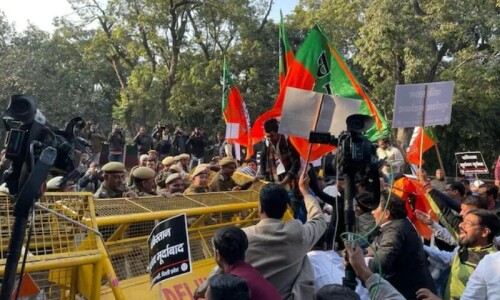
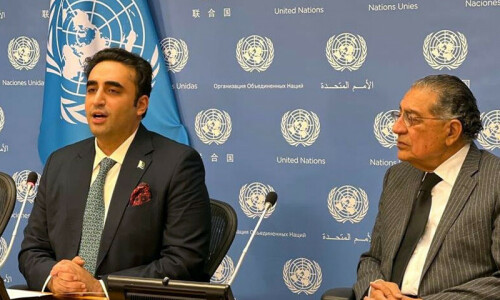
Then, at a UN media stakeout in the US, a particularly tense indirect exchange was witnessed between Foreign Minister Bilawal Bhutto-Zardari and his Indian counterpart. The Indian minister had termed Pakistan the “epicentre of terrorism”, while accusing Pakistan of having sheltered Osama bin Laden. Mr Bhutto-Zardari responded firmly, pointing out that the “butcher of Gujarat” was now the Indian prime minister, and that India’s top offices were occupied by RSS men. In the aftermath of this incident, there have been further recriminations between both governments, while a BJP mob attempted to storm the Pakistan high commission in Delhi on Friday.
From here, Pakistan needs to proceed cautiously and handle the diplomatic spat in a mature and forward-looking fashion. It must be clearly communicated to India that any threats hurled against Pakistan’s territorial integrity will not be tolerated, and that this nation will defend itself robustly.
Similarly, New Delhi must be made aware that its involvement in fanning unrest and terrorism within Pakistan is unacceptable and will be exposed internationally. However, with these red lines set, it is in the interest of both to work towards peace, instead of beating the drums of war.
Pakistan’s repeated offer of engagement has been turned down by the far right dispensation ruling India. The peace process is unlikely to be resumed anytime soon, but at least both sides should dial down the rhetoric to prevent further escalation.
Published in Dawn, December 18th, 2022